Enter a keyword below to search for articles and products.
Oral care is a key component of your pet’s overall health: A smart regimen can help prevent the development of serious conditions. Keeping your pet’s teeth clean and bacteria-free results in more than just healthy teeth and fresh breath. With a little know-how and effort, you can protect your pet for a lifetime of companionship.
Tartar and gingivitis are the most common problems seen by veterinarians. The majority of dogs will develop these problems. Unchecked, these can lead to periodontitis and serious health concerns for your pet, up to and including, tooth loss and serious illness. But you can take action to control this and promote good oral health by incorporating the 3Ds: Daily Brushing, Dentistry. and Diet.
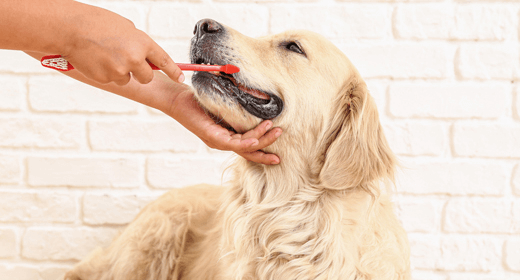
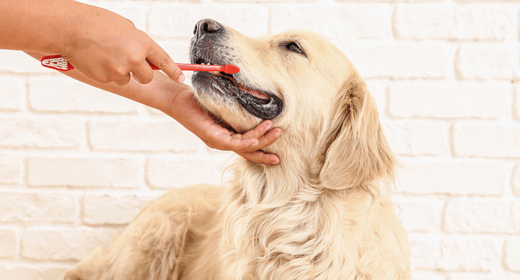
Daily brushing of your pet’s teeth will remove plaque and slow the development of tartar. When first beginning to brush, be gradual and make it a pleasant experience. Start by using your finger. Later, introduce a toothbrush. Be sure to praise and reassure your pet while brushing. Also, reward your pet afterward with play or a walk.
Talk with your veterinarian about annual or semiannual teeth cleaning—a dental prophylaxis or prophy for short. Teeth cleaning, performed by your veterinarian, is the only way to remove tartar.
Diet is important to good oral health. The mechanical, brushing action of dry, crunchy kibbles helps remove plaque and works to scrub teeth clean. Some diets also might include ingredients such as hexametaphosphate (HMP) that can help block tartar formation. Diet, daily brushing, and dentistry helps break the plaque-to- tartar cycle and optimize oral health.


Leash training can help your puppy safely explore the world beyond your house or backyard. It can enhance your dog’s walking experience and help you bond with it better. We must remember that dogs are not born with the ability to walk on a leash, they need to be taught. As their caregivers, we need to help them learn this skill comfortably.
If you have a large breed pup, it is imperative that you train it while it is still young. Once your fur baby grows up to be heavy, you will have a tough time handling it on a leash. You do not want to be dragged along the ground or see your dog get into an easily avoidable fracas.
In case you are wondering at what age to start leash training a puppy, here’s your answer: You are start at 10 weeks of its age, however, you must know that it can be done earlier. It will help your pup grow into an obedient pawsome pal. Leash training also makes it easier for you to travel with your pet and embark on exciting adventures seamlessly! Train your puppies while they are still young as it will stay with them for the rest of their lives.
If you are facing any trouble with how to teach your puppy to walk on a leash, here are some tips to get you started:
Picking the right collar is the first step to getting your dog used to a puppy leash. It is imperative that your fur baby feels comfortable in it. So, make sure that the collar is neither too tight nor too loose; there should be space for at least two fingers under it. While leash training your puppy, breathability and comfort is of paramount importance.
Note: If you plan on training your puppy at an early age, stay attentive during sessions. Since your little furry friend will be at a developing stage, it will outgrow its collar soon. Make sure that you keep checking the fit of the collar and change it as and when needed.
Your puppy will need some time to get used to the leash. For puppies, this is an alien thing, and they will need some time to adjust and accept this new accessory. You can help your pup ease into this process by trying a few tricks. It needs to resonate a leash with fun times. Let it spend some time playing with the leash. You can also make your canine companion wear it every time you are having a fun time together at home. Do not put it on when it is alone, sad, or irritated.
As you teach your puppy how to walk on a leash, remember that rewarding it with treats will only promote good behaviour. Grab a treat in your hands and take a few steps back. This will encourage your pooch to walk towards you to devour its favourite treat. To avoid overeating, you can also reward the pup with toys, praises, or belly rubs.
Note: Do not stretch your dog’s leash training for prolonged hours. It might get exhausted and shy away from training.
Indoor practice is the best way of gauging how your canine companion fares with the concept of walking on leash. This will also help you get your puppy used to the leash without losing control of it. Choose a decent stretch of floor in your home, make sure there are no obstructions, and just start walking with your puppy on a leash. At the end of one stretch, reward it with treats. Stay attentive during these session to know when your pup is ready for the world outside your home.
Teaching your puppy how to walk on a leash is going to be full of surprises. If you think that your pet will easily walk on a leash outdoors once it has learnt to do it indoors, you are mistaken. Being curious is only natural and that is exactly what will happen once your four-legged friend realises that it is not at home anymore! Your dog will want to sniff every corner, every plant, and whatever it sets its eyes on. Hence, start with short outdoor walks!
Note: Carry some treats with you to encourage your puppy to follow you!
Remember that patience is key! And your furry friend is not the only one who needs to be patient during this process. Your puppy is going to need some time to get used to this walking style and you need to give it that time. Moreover, make sure that this transition is smooth and comfortable for your pup. Once you start putting these tips into action, you two can start taking long strolls together.