Enter a keyword below to search for articles and products.
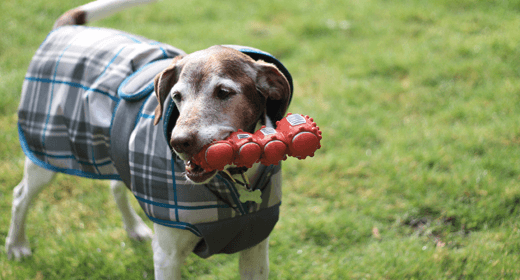
Your puppy's first visit to the vet will probably be more than just a quick hello. Get all the details from Veterinarian Dr. Katy Nelson as she talks about important details like how to properly bring your puppy into the vet's office and vaccinations he needs.
Your puppy's first veterinary checkup is about much more than simply greeting your dog's new vet, weighing in, and getting him his standard immunizations. Believe it or not, your first visit is just as much about educating yourself and answering your questions as it is about checking the health of your newest family member. Your first vet visit requires organization, preparation, and sometimes even some light note taking. Hi, I'm Dr. Katy Nelson with IAMS, and today we're talking about how to take your new puppy to his first veterinary appointment. Let's begin with what you'll need to bring to your first visit. First, you should find out what the breeder or shelter has already done for your puppy. They've probably given them some vaccinations. He probably has also been placed on a deworming schedule, and may even be on a heartworm preventative. And depending upon his breed, the tail may have been docked and the dewclaws removed. Your veterinarian will need all of this information, along with the puppy's approximate birth date. So it's important to bring all of your paperwork with you to your first veterinarian visit, so they can help you determine a schedule for completing immunizations, and determine when it's best to schedule spaying and neutering. Next you should bring a fresh stool sample to your first visit, so the veterinarian can check for parasites. Lastly, prepare a list of questions. After having your puppy home for a few days, there's no better time to ask questions than at your first visit with a medical professional. Ask other family members, too, if they have any questions that they'd like added to your list. Once you're prepared, bring your puppy's crate to the car, and do your best to secure it with available seat belts. Depending on the size and weight of the crate and the puppy, it's usually easier to secure the crate first, and then put your puppy inside. If you cannot fit a crate in your car, try purchasing a dog seat belt that is specifically designed to restrain and protect your puppy in case of an accident. This next piece of information is critical. Carry your puppy into the doctor's office. Do not let him interact with any other animals in the office. Though the other animals may be perfectly healthy themselves, your puppy can still get very sick from even just rubbing noses with another dog until his vaccinations and immunity against disease is further developed. After greeting you and your new pup, your vet will likely begin examining your pup as she continues to converse and answer your questions. She'll check your puppy's weight, temperature, heart, lungs, ears, genitals, eyes, nose, skin, anal region, mouth, and gums for both basic and breed abnormalities. Your puppy needs to learn to be comfortable being handled by others. Remaining calm and peaceful in the new environment with the vet or any other stranger will allow your puppy to do the same. Depending on the status of your puppy's records and stool exam, your puppy will also begin the deworming process, receive the following initial vaccines: rabies, distemper, and Bordatella. If your puppy's exposed to other dogs in boarding, public dog parks, training, and other situations, then based on geography and lifestyle, ask your veterinarian which vaccines they recommend for your puppy. Also, ask your vet about microchipping, and when it is safe to begin socializing and training your pup. Following the initial visit, your veterinarian will ask that you return to booster the vaccines until your puppy reaches a certain age. The time between boosters typically ranges between two and four weeks. Here are some signs that your puppy needs immediate medical care: allergic reactions or swelling around the face, hives-- this is most easily seen on the belly or face-- any eye injuries, any respiratory problems, any signs of pain-- panting, labored breathing, increased body temperature, lethargy, restlessness, or loss of appetite-- any suspected poisoning, any open wound, a seizure, fainting, or collapse, snake bites, thermal stress-- either too hot or too cold-- trauma, like if he's hit by a car, even if he seems fine, vomiting or diarrhea more than two or three times within an hour. I'm Dr. Katy Nelson with IAMS, and I hope that you found this helpful as you welcome your new addition to the family.
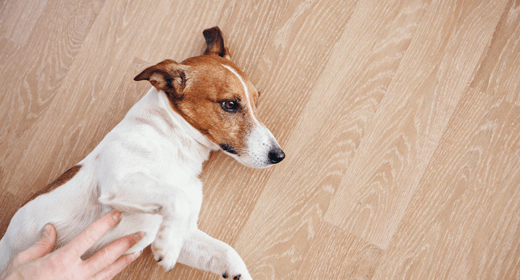
Bloat can affect any dog; however, it is observed in deep-chested, larger breeds more frequently than in others. Unfortunately, you will find that many dog owners are completely unaware of this ailment until it starts to endanger their pet’s life.
Bloat can affect any dog; however, it is observed in deep-chested, larger breeds more frequently than in others. Unfortunately, you will find that many dog owners are completely unaware of this ailment until it starts to endanger their pet’s life. Therefore, all pet owners should be aware of bloat and how to spot and respond to symptoms of bloat in dogs. So, here’s all you need to know about bloating in dogs.
Bloat is a life-threatening condition that acts rapidly and can lead to death within hours if not recognised and treated immediately. Unfortunately, the cause of bloat remains unknown at this time.
The scientific term for bloat is gastric dilatation-volvulus or GDV. Bloat is characterised by rapid and abnormal expansion of the stomach with gas (dilatation). This can be followed by rotation of the stomach (volvulus). This rotation closes both the entry to and exit from the stomach. The blood vessels also are closed, and the blood flow is restricted.
What follows is an increase in pressure inside the stomach and compression of the surrounding organs. Eventually, shock will occur as a result of the restricted blood flow. Here are a few key facts about bloat:
Bloat is a true medical emergency, and early identification and treatment is critical for survival.
In the early stages of bloat, the dog will be very uncomfortable. You might see it pacing and whining or trying unsuccessfully to get into a comfortable position. It might seem anxious, might lick, or keep staring at its stomach, and might attempt to vomit, without success.
Other indications of bloat can include weakness, swollen abdomen, and even signs of shock. Signs of shock are increased heart rate and abnormally rapid breathing.
If you notice these signs of bloat in dogs, call your veterinarian immediately!
This occurs due to gas getting trapped in the stomach region.
Gastrointestinal problems in dogs can cause excessive salivation, including esophageal diseases like megaesophagus.
Pacing and restlessness are typical signs of bloating. Your dog may even groan or whine when you press on their belly.
An abnormal swelling due to gas in your dog’s stomach can also cause respiratory distress along with a twisted belly.
Bloating can put strain on the diaphragm, a delicate muscle that divides the chest from the abdomen. This ends up making heartbeats shorter and breathing difficult.
Although veterinarians don't know what causes bloat in dogs, there are numerous factors that increase a dog's risk for this condition. These include:
These suggestions could help in preventing bloat in dogs. However, they are based on suspected risk factors and are not guaranteed to prevent the onset of bloat.
All cases of bloat in dogs require prompt medical intervention. The condition can be treated if it gets addressed quickly. In case of a simple bloat, where the dog's stomach has not twisted, the pet may be treated without any medication. They may be given fluids and certain therapies. If discovered in its early stages, other types of bloats such as GDV, may also be treatable. Surgical intervention may also be used for treatment in certain cases.
Releasing the trapped air and gas will relieve pressure on the surrounding organs and prevent the stomach's tissue from degenerating. A tube and stomach pump can be used for this; however, surgery may be required on occasion. This can aid in stomach unwinding or curing GDV in dogs.
Additionally, electrolyte-fortified intravenous fluids are also administered to improve blood flow to vital organs. In many cases, this necessitates the use of potent painkillers, antibiotics, and medications to treat the decreased blood supply to the heart due to bloating.
As soon as the dog is steady, surgery is carried out. Your veterinarian may need to untwist the dog's stomach and remove any stomach wall tissue that might have died from a lack of blood supply. The veterinarian will also perform a treatment known as a gastropexy to suture the stomach to the body wall. As a result, the likelihood of the stomach rotating in the future decreases significantly; thus, preventing bloat in dogs.
Another way you might help prevent bloat is by feed a high-quality, easily digestible food with normal fibre levels.
Feeding management offers the best method available for reducing risk until the exact cause of bloat can be identified. Although not 100% effective, these measures can reduce the number of dogs that face this serious, life-threatening condition.
IAMS™ dog food stands out as a superior and highly digestible choice for your furry companion.
If you're looking for the perfect dog for you, try our Dog Breed Selector today and enjoy a lifetime of tail-wagging joy.