Enter a keyword below to search for articles and products.
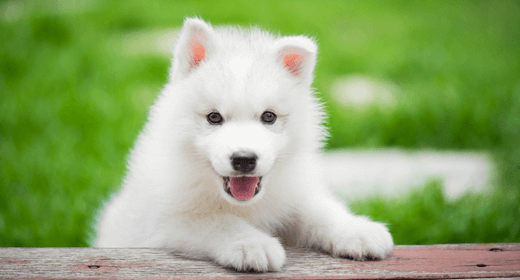
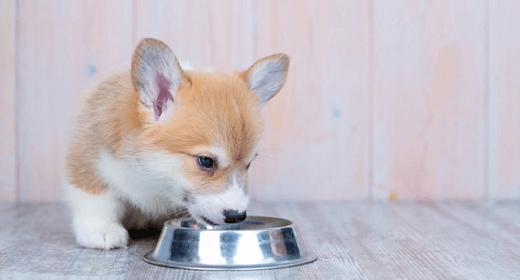
Puppies like human babies need additional love, care, and support in their growing age. The first month of a new puppy is critical as it needs the best healthcare, nutrition, and love to grow into a healthy and cheerful dog. Puppy health becomes the primary responsibility of pet parents during this stage. They must ensure preventive care and medical support alongside providing proper nourishment. To know more about the puppy health checklist, read the following.
Maintaining puppy health is the foremost important duty of every pet parent. Consulting a vet, vaccinating, neutering, and availing regular healthcare check-ups are a few duties of puppy caregivers. Similarly, other puppy preventive care includes:
Medical and preventive care is extremely necessary for puppies. Younger puppies are too small to understand what is good or bad for them. Besides, they are also very curious, playful, and energetic during their initial years. This playful and curious nature can sometimes lead to harmful situations.
Puppies often play and munch on random objects, which can sometimes result in toxication. In fact, accidents are also common in puppies as they lack cognitive skills to measure the consequences of their action. Hence, pet parents should pay more attention to their puppy’s growth and development. Some essential puppy health recommendations are as mentioned:
Apart following puppy health checklist, pet parents also need to ensure their fur baby is provided with other basic facilities for their overall growth and development. Training and socializing are as important as providing the best healthcare.
Besides, potty training and command training establishes hygiene and good behavior in them from a young age. To conclude, puppy health, fitness, and training are some of the most essential aspects for the overall growth and development of puppies.
Observe the puppy daily to look for signs of discomfort, illness, and abnormalities. If you notice a major shift in the puppy’s mood or changes in physical attributions, stool, fur, and other attributes, then consult a vet at the earliest. However, if everything looks and feels normal then you have a healthy puppy.
Soft and shiny fur, clean ear, bright eyes, a clear nose, and a playful mood are some essential signs of a healthy puppy.
Diarrhea, vomiting, itching, whimpering, and loss of energy are some signs of a sick puppy.
Parasites, kennel cough, parvovirus, vomiting, and diarrhoea are some common illnesses in puppies.
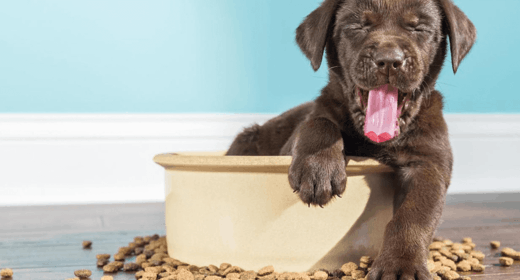
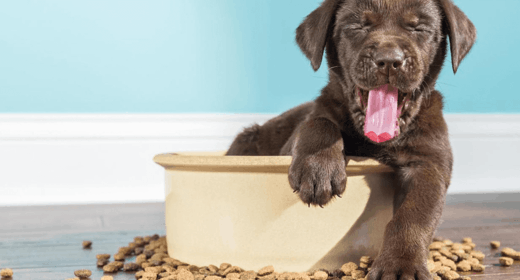
If you’ve got a big love for big dogs, IAMS™ has a large-breed puppy formula specially made for their nutritional needs.
Many large-breed puppies have a tendency to grow very quickly. Unfortunately, if this tendency is encouraged by overfeeding, developmental bone problems can occur. To avoid these problems, careful feeding management is necessary. This should include
Our specially formulated large-breed puppy formulas make feeding management easier because they are designed for fast-growing, large-breed puppies (those with an expected adult weight of more than 50 pounds).
A protein level approximating 26% in these formulas promotes healthy body condition and balances the protein with the reduced number of calories in the food. Research has shown that
The protein in our large-breed puppy formulas supports normal skeletal and muscular growth.
Fat contributes more than twice as many calories in a diet as proteins or carbohydrates do. As the fat level increases, the energy content of the diet also increases, making feeding management more difficult for large-breed puppies. Several studies have shown increases in developmental bone problems when a diet was overfed.2, 3
By reducing the fat content of large-breed puppy formulas to about 14%, the metabolizable energy (ME) of the diets can be kept to a low level of about 1,800 kilocalories per pound.
Fat contributes more than twice as many calories in a diet as proteins or carbohydrates
Our large-breed puppy formulas, such as IAMS ProActive Health™ Smart Puppy Large Breed, are made specifically for growing puppies with expected adult weights of 50 pounds or more. These puppy foods are unique because they are formulated with:
Reduced calcium and phosphorus levels with a normal calcium-to-phosphorus ratio to promote proper bone development in rapidly growing large breed puppies.
1 Nap, et al. Growth and skeletal development in Great Dane pups fed different levels of protein intake. J Nutr 1991; 121:S107-S113.
2 Hedhammer, et al. Over nutrition and skeletal disease: an experimental study in growing Great Dane dogs. Cornell Vet 1974; 64:1-159.
3 Lavelle. The effect of overfeeding of a balanced complete commercial diet to a group of growing Great Danes. In: Nutrition of the dog and cat. Burger and Rivers (eds). Cambridge Univ Press, 1989:303-316.
4 Hazewinkel, et al. Influences of chronic calcium excess on the skeletal development of growing Great Danes, J Am Anim Hosp Assoc 1985; 21:377-391.
5 Goedegebuure, Hazewinkel. Morphological findings in young dogs chronically fed a diet containing excess calcium. Vet Pathol 1986; 23:594-605.
6 Hazewinkel, et al. Calcium metabolism in Great Dane dogs fed diets with various calcium and phosphorus levels. J Nutr 1991; 121:S99-S106.