Enter a keyword below to search for articles and products.


Watch as Expert Dog Trainer Kathy Santo talks about how to crate train your puppy. She’ll go over everything from the philosophy behind the crate training method to precautions you should take to make sure that it’s a positive experience for the both of you.
Hi, I'm Kathy Santo with IAMS, and today we're going to talk about how to crate train your puppy. We'll begin with a general discussion on the philosophy supporting the crate training method. We'll review what you'll need, the steps involved in the process itself, and some possible troubles you may encounter along the way. Before you begin crate training, it helps to understand the philosophy behind this method. If your dog is properly crate trained, he'll view his crate as a private room with a view, a safe haven he can call his own, and a quiet place he can relax in. He won't see it as a rigid structure of confinement and punishment. In fact, it'll be just the opposite. In nature, wild dogs seek out and use their den as a home where they can hide from danger, sleep, and raise their young. In your home, the crate becomes your puppy's den, an ideal spot to sleep and stay out of harm's way. And for you, the benefits of crate training are house training, because your puppy won't like to soil the area where he sleeps, limited access to the rest of the house, where he learns the house rules, and transporting safely and easily in the car. Start crate training a few days after your puppy settles in. Before you can start crate training, you and your family members must understand that the create can never be used for punishment. Never leave your young puppy under six months in his crate for more than three hours. He'll get bored, have to go to the bathroom, and won't understand why he's been left alone in discomfort. As your dog gets older, he can be crated for longer periods of time, because his bladder isn't as small. But keep in mind he still needs a healthy portion of exercise and attention daily. If you and your family are unable to accommodate your puppy's exercise, feeding, and bathroom needs, consider hiring a dog walker or asking a neighbor or friend for assistance. After that, the crate should be a place he goes into voluntarily, with the door always open. There are a variety of crates available for purchase these days, each of which is designed for a different lifestyle need. When selecting a crate, you want to make sure it's just large enough for your puppy to be able to stand up, turn around, and lay down in comfortably. Because your puppy will grow quickly, I often recommend getting a crate that fits the size you expect your puppy to grow to, and simply block off the excess crate space, so your dog can't eliminate at one end and retreat to the other. The two most important things to remember while crate training are that it should be associated with something pleasant, and takes place in a series of small steps. The first step is to introduce your puppy to his crate. This will serve as his new den. Put bedding and chew toys in his crate, and let him investigate his area. If he chews or urinates on his bedding, permanently remove it. Observe and interact with your puppy while he's acclimating to his crate. This will help forge a sense of pack, and establish you as the pack leader. Encourage him to enter the crate with soft words and some treats. You can also pre-place some treats in the back corners and under the blankets to help make it a pleasant experience. Step two is to start feeding your puppy in his crate. Begin with the bowls near the opening of the crate. As your puppy becomes less reluctant to enter, slowly inch the food back every feeding, until you're placing it all the way in the back. When you get to the point where your puppy happily enters the crate, and stands in the back to eat, begin gently closing the crate door behind him while he's eating. At first, open the door immediately after he finishes. But after that, begin leaving the door closed a bit longer every time. If your puppy cries, you may have increased the time too fast. So decrease the length of it, and then slowly begin increasing it again. When he does cry, do not let him out until he stops, or he'll always do this to get his way. Once your puppy is used to eating his meals and waiting to be let out with no anxiety or crying, you can start confining him longer when you're home. To do so, call him over with a treat, and give it to him in his crate. Associating a command such as 'kennel' is important, so he understands the reward is a result of going in the crate. At first, you'll need to sit quietly next to him. If he's fine after 10 minutes, go into the other room for a bit, and then come back and let him out, only if he is calm and not crying. If he is crying, you'll have to wait until he's calm. Once you can leave him for about 30 minutes at a time without him getting upset, you can start leaving him there longer. Eventually, decrease the amount of reward you give him for entering the crate, so that saying the command word is sufficient. When you get home after being away for a long time, your puppy will likely be very excited to see you. It's important not to reward this behavior, or anticipating your arrival every day may be stressful for him. And lastly, make sure to crate your dog for short periods of time while you're home, or else he will associate crating with being left alone. I'm Kathy Santo with IAMS, and I hope that you found this helpful as you welcome your new addition to your family.
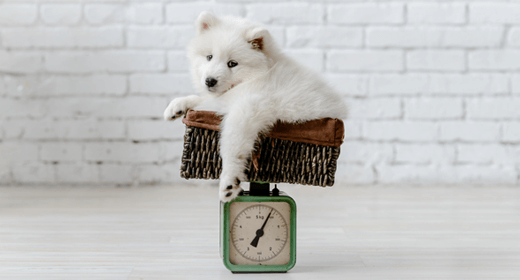
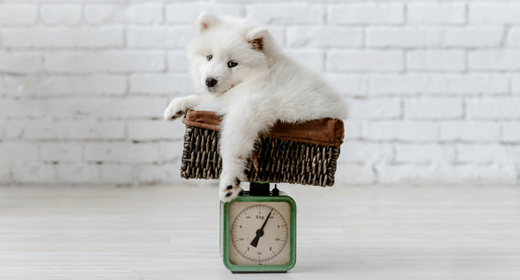
Just like in humans, obesity can lead to serious health issues in dogs as well. The primary causes of obesity in dogs are lack of physical activities, imbalanced diet, and overfeeding. If you notice a sudden increase in your dog’s weight despite having a normal diet and sufficient exercise, it could also be a sign of some hormonal disorder. Obese dogs are at risk of developing diabetes, heart diseases, bone deterioration, arthritis, and other severe disorders. Thus, it is crucial to monitor your dog’s weight.
Wondering what is the ideal weight for dogs? A dog’s healthy weight can differ from breed to breed; hence, you can consult your vet to understand the right weight range for your pet. However, the below dog weight chart will help you get an idea on whether your furry friend is underweight, healthy, or obese.
Underweight: You can clearly see an underweight dog’s ribs, spine, and hip bone. There is zero body fat and that can be seen on its body. In dogs who are genetically thin, the loss of muscle mass may be evident.
Ideal: You can easily feel the ribs, spine and hips of a dog that falls in an ideal weight category. Its waist should also be visible from above and the side. The last couple of ribs may be visible on a short-coated dog while playing or exercising, which is normal.
Overweight: A dog is considered overweight when it weighs 10-20% more than its ideal body weight. It is difficult to feel the ribs of these dogs. The fat accumulation is also visible at the base of its tail and on the belly. Its back also starts to appear broader. It is advisable to start working on shedding the extra kilos your dog has gained at this stage.
Obese: A dog is considered overweight when it weighs 20% more than its ideal weight. You cannot feel its ribs at all due to the heavy fat accumulation. Fat deposits are also visible around the dog’s neck and its belly also starts to droop.
You can measure your dog’s weight at home if your dog is a small breed. Here are the steps to follow while measuring the weight of your dog at home:
These steps should not be followed by those who have medium or large breed dogs. The size of your dog could make it difficult for you to hold it properly, and if it starts fidgeting, the handler or the dog could get injured. Hence, owners of medium and large breed dogs should go to the vet to weigh their pet.
You can easily manage your dog’s weight and maintain the ideal weight of your dog if you follow a regime and take the necessary steps. Here’s are some things you should keep in mind during your dog’s weight management:
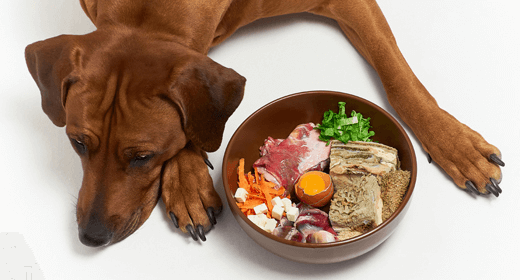
Dogs remain healthy if their food quantity is controlled and they are fed on time. But you should avoid feeding your dog home-cooked food. Wondering why? It is because home-cooked meals might not have the right nutrients in the right quantities and that can later affect your furry friend’s overall health. Hence, to keep such risks at bay, it is best that you avoid feeding home-cooked food. In case you plan on giving your dog home-cooked meals, it is imperative that you follow the recipe to the T.
Your dog is your friend so, it's hard not to share your delicious bacon or a mouthful of steak with it. When your dog sits next to you and makes those adorable puppy-dog eyes as you eat, it becomes even more difficult to not share some of your food with it. But you must resist. Giving “human food” greatly increases your dog’s fat intake. It also conditions the dog to believe that it will be fed every time you eat.
Exercise is a great way to keep your dog in shape. If you have a busy schedule, then you could break it down into short sessions to play fun games like tug-of-war or go for a quick jog with your dog. You could also play with a frisbee or start working on its agility. Dogs that get enough exercise are less likely to be stressed and this way, you would also get a break from your work.
Of course, you want to reward a dog when it’s been a good boy or a good girl. But keep in mind that those dog treats can add calories and fat. And more importantly, think about how many types of treats and snacks you are feeding your dog and how often.
Of course, you want to reward a dog when it’s been a good boy or a good girl. But keep in mind that those snacks can add calories and fat. And more importantly, think about how many types of treats and snacks you are feeding your dog and how often.
There are lots of dog foods available in the market and each pack contains different quantities of proteins, vitamins, minerals, and other nutrients. You must go for foods that provide complete nutrition to your furry friend, and not just calories. Hence, it is necessary to opt for a pet food brand that specialises in dog nutrition.
At IAMS™, we have been focusing on bringing out the best in your dog through healthy food. Explore our range of dog food and choose a product that best suits your dog’s size and age. However, consult your vet regarding the serving size and other details. A vet will also provide you with the tips and tricks on keeping your dog’s weight under control.
If you're looking for the perfect dog for you, try our Dog Breed Selector today and enjoy a lifetime of tail-wagging joy.