Enter a keyword below to search for articles and products.
Confused by the ingredient list on your kitten’s food? You’re not alone. Marketing pet foods that have “human-grade ingredients” is becoming commonplace. While appealing to many pet owners, it is important to be aware that the term “human grade” has no legal definition and is used primarily for marketing purposes.
Foods, typically meats, are labeled either as “edible” or “inedible, not for human consumption.” Once a food leaves the human food chain, even if it is of outstanding quality, it has to be labeled “inedible, not for human consumption.”
Therefore, meats used in pet food must be labeled as “inedible,” regardless of the source or quality of the meat. The only way to make a pet food with ingredients deemed “edible” is to never let the meat leave the human food chain and actually manufacture the pet food in a human food facility and transport it using human food trucks.
Therefore, advertising a product as containing “human-grade ingredients” is untrue if it is not manufactured in a human food facility.
However, just because a pet food isn’t marketed as being “human grade” does not mean that the ingredients are poor quality.
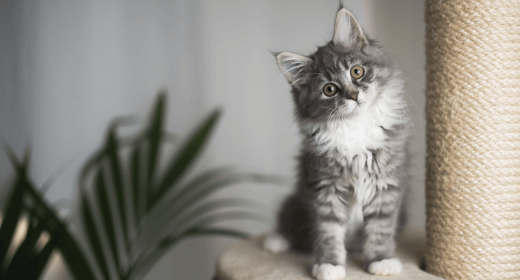
Kittens are super adorable, and it is wonderful to have one as a pet. While it’s fun to have a kitten at home, it’s important to understand your kitten’s various needs during the different stages of its life and take care of it in the right way. ‘How to take care of kittens’ is a question that most first-time kitten owners ask. But taking care of newborn kittens can be quite a hassle-free process if you follow a routine and understand a few do’s and don’ts about kitten care. We, at IAMS, are here to help you with this process in every way we can.
Kitty care is extremely important to make sure your kitten grows up to be a healthy cat. While in the kitten stage, it is still trying to get used to the new surroundings. Therefore, we recommend that you be by its side and help the little kitten acclimatize to its new house.
A kitten becomes a part of your family right from day one. But raising a kitten might sound like a strenuous job if you’re a new pet parent, but it isn’t. The whole process can be quite fun and will help you bond with your kitten.
Some of the most important aspects of looking after a kitten are:
As a first-time kitten owner, you might not be aware of the growth stages your little feline friend will go through, but it’s very important to understand them. So, here’s a table that can help you with the same:
Growth stage | 0-2 weeks (Neonatal) | 2-7 weeks (Socialization) | 7-14 weeks (Most Active Period) | 3-6 months (Ranking Period) | 6-18 months (Adolescence) |
Character traits | Learns to incline towards sounds | Learns to socialize | This is the most active play period of your kitten | In this stage, the kitten gets most influenced by other kittens in their litter or even other animals. | Asserts maximum dominance in this stage. |
Eyes start to open by this time | Senses of smell and hearing are fully developed by the 4th week | Starts expressing affection through hugging and licking | Starts understanding and asserting ranks on people it lives with. | Exhibits sexual behavior if not spayed. | |
If the kitten is separated from its mother or siblings, it may tend to get aggressive towards people and other cats. | Sight is fully developed by the 5th week, and they can run and pounce without colliding with obstacles | Can paw, mouth, and hold objects as well | |||
Starts grooming itself | Also starts chasing its tail and starts pouncing and leaping around | ||||
Starts developing sleep patterns, motor abilities and interactions |
The major difference that occurs in taking care of kittens when they grow up is switching their food. Cats need more nutrition and vital elements that keep its body strong and healthy. It is advisable to switch to premium cat food while transitioning your kitten to adult cat food.
If your cat is neglected and does not receive proper care, attention, and nutrition, it may become depressed and weak. Your cat may also contract diseases if it is not kept clean.
While in the kitten stage, it is advisable to schedule frequent visits to the vet to check on the overall health of your kitten. It is advisable to keep a tab on their allergies while it is in the kitten stage.
Here are a few tips for first-time cat owners: