Enter a keyword below to search for articles and products.
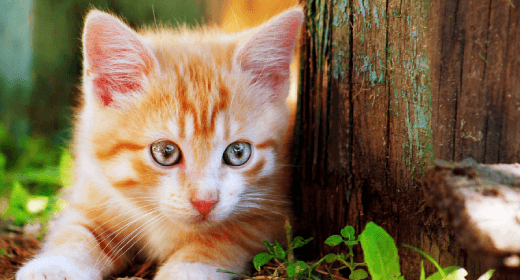
Cats belong to the Felidae family which also includes tigers and lions. Although your little bundle of cuteness is not as fierce as its other distinct family, it still has similar physiological and nutritional needs. Compared to other pets, cats and kittens need more protein for adequate growth and development. Hence, their guardians need to ensure they include kitten food with high protein in their kitty’s diet.
Kittens need more protein as they need more energy. Hence, when choosing kitten food, you must go for foods with higher protein content. Most kitten food use plant and meat-based protein to meet the kitten’s daily protein requirement. While protein is essential, you must also consider your cat’s allergies and medical diagnosis before choosing any protein for kittens.
High-protein kitten food should contain the appropriate balance of all essential amino acids and good-quality digestible protein alongside other important nutrients. Cats are primarily carnivores, which means they largely depend on meat as their main source of nutrition.
Amino acids are molecules that come together to form protein. Cats need two essential amino acids for their overall growth and well-being, unlike other species that need nine specific amino acids. Hence, when looking for protein for kittens, you should search for the following essential amino acids:
Ideally, all types of kitten food contain protein. However, as cat parents, you should check its percentage daily value to ensure that you get high-protein kitten food for your growing feline friend. Yet, you must know that your kitten’s protein requirement will change as it ages.
Cats need approximately 3.9 grams per kg of their body weight. Hence, cat parents should look for kitten food with high protein for their fur baby. Typically, cats need approximately 35 to 45% protein for better growth and development. Refer to the table below to know the approximate amount of protein content in kitten food:
Cat’s growth stage | Approximate % of protein required |
Kitten | 40-50% |
Adult | 35-40% |
Pregnant/nursing | 45-50% |
Senior | 35-38% |
Protein is an essential element required for your cat’s consistent growth and health. Cats highly depend on protein for energy. Therefore, kitten food high in protein is supposed to be an integral part of your tiny fur baby’s diet not only in their initial years but also as they grow up. When creating a dietary plan for your cat, you must check for the kitten food protein content to ensure you make the right choice. The following are some of the most common sources of protein that will help you make better choices when selecting a cat food brand.
You should look for these meats when buying kitten food with high protein. IAMS Proactive Health Mother and Kitten™ is made with chicken meat and salmon as well as tuna flour, so your kitty can receive the right amount of protein. It supports eye and brain development while also ensuring healthy digestion.
Essentially, all cats need protein for their ideal growth and overall development. But how to identify how much protein is enough for your kitty? Ideally, all adult cats require approximately 35% protein in their diet. According to AAFCO (Association of American Feed Control Officials), cats need a minimum of 30% protein for growth and reproduction and 26% protein for adult maintenance. Poor-quality protein or low protein might lead to indigestion and loss of muscle mass in kittens and cats. Hence, all cat caregivers must ensure to include the optimum quality of protein in their pets’ daily meals.
AAFCO provides nutrient recommendations based on dry matter. This means, if you are feeding wet cat food to your kitten, then you might have to manually calculate its protein content. The following is the formula for calculating wet cat food’s protein content:
Step 1: Find dry matter of the food by subtracting the maximum moisture percentage from 100.
Step 2: Divide the minimum crude protein by the per cent of dry matter.
Step 3: Multiply its result by 100 to get the result of the percentage of protein available in the dry matter of the meal.
You can choose between animal-based and plant-based protein when looking for high-protein kitten food. Please note, it is recommended to consult their veterinarian before choosing the right protein for kittens.
Yes, protein is the main source of energy for cats. This means a high-protein diet is ideal for kittens as it aids their overall growth and development.
Most cats prefer meat-based proteins. The three main sources of high-quality protein preferred by kittens are chicken, lamb, and fish.
Allergies may differ from cat to cat. Chicken is believed to be a common food allergy in most cats. However, some cats might also be allergic to beef, egg, soy, milk, turkey, and other food items. Please consult a veterinarian before giving any new type of protein-rich kitten food to your kitty.
One of the easiest high-protein food for cats to digest is chicken. However, it is recommended to consult a veterinarian to confirm the kitten’s allergies before feeding them any new brand or type of protein-rich meal.
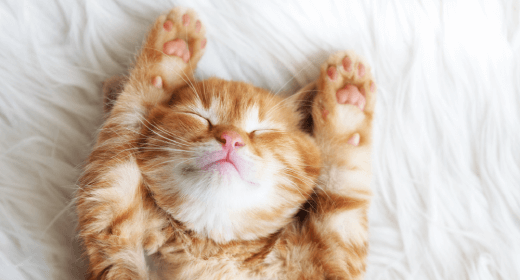
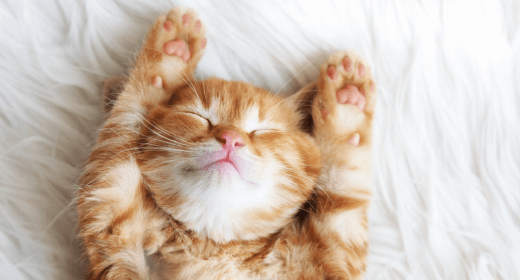
Kittens are curious, energetic fluffballs with boundless energy. A safe, enriching environment can cater to your kitten’s playful side, stimulate them physically and mentally, and benefit their health and development for the rest of their life.
Keeping your kitten indoors has significant benefits because it protects them from a large number of dangers. But without all the sights, sounds and smells of nature, a kitten needs other ways to stimulate their mind and body.
To build your kitten an enriching environment, provide them with safe places for hiding and resting, like window ledges, carriers or perches. Your kitten should feel protected in their safe spots and may prefer an enclosed resting area. While kittens spend a great deal of their time sleeping, their periods of wakefulness can and should be used to stimulate psychological and physical activity.
It’s important to create stimulating places for entertainment and play, as well. Cats can benefit from spaces at different vertical levels, like cat trees and perches. A variety of scratching posts can teach your kitten appropriate scratching while nurturing their natural instincts, and protect your furniture and carpet from their sharp claws.
Many cats also benefit from social activity with other cats, especially if they were introduced to other cats early in life. Providing your kitten with another kitten or young cat as a play buddy can help meet their need for near-constant play and motion. Keep in mind that cats put a premium on managing space, so it’s important that multiple-cat homes offer a variety of places to hide, sleep and observe, using both the horizontal and vertical dimensions.
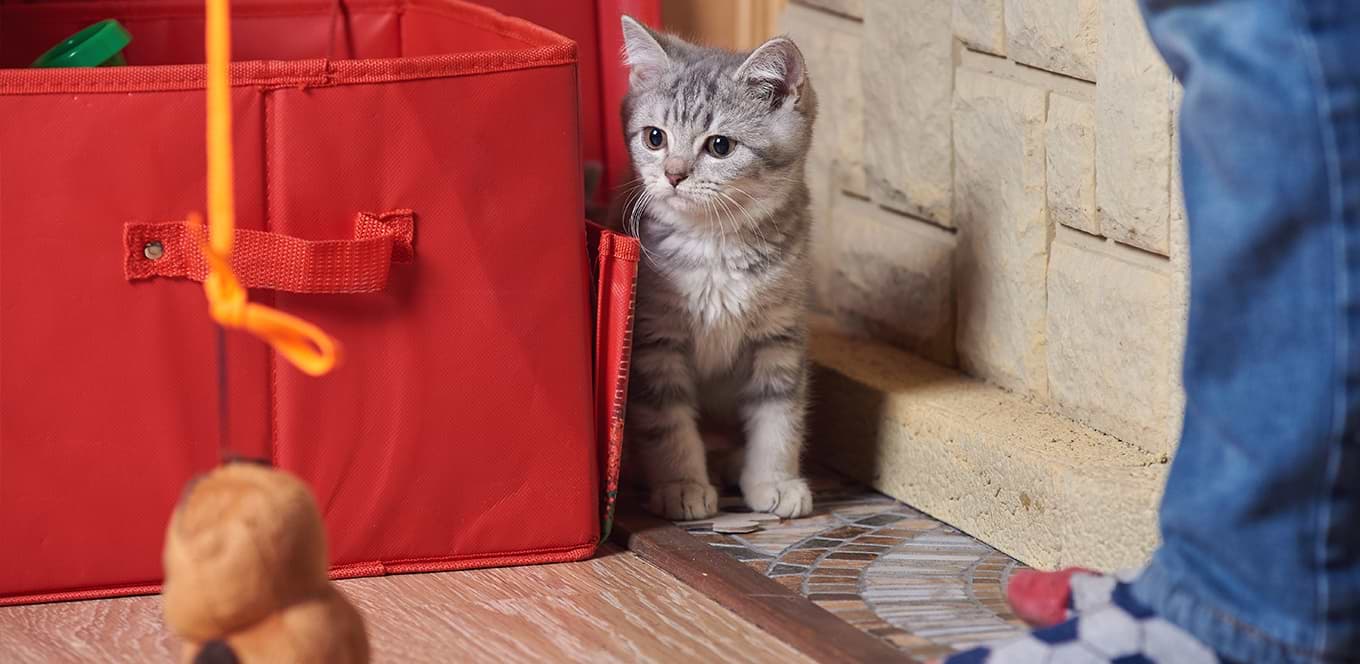
An important component to enriching your kitten’s environment is socialization and play, especially if your kitten is the only animal in the household. A kitten’s natural predator-play behavior is usually easy to stimulate with interactive toys, such as wand toys or balls to pounce on or chase.
Playing kitten games with your pet helps them develop coordination and natural hunting skills. It also can help them learn boundaries and develop a bond with their new owner. Aim for 10 to 15 minutes of structured playtime two or three times a day. One way to prevent the “nighttime crazies” is to engage in active, vigorous play before feeding your kitten at bedtime. This helps wear out the kitten before bed and mimics the natural hunting-feeding-grooming-sleeping sequence in cats.
Engaging games to play with your kitten include:
An important component to enriching your kitten’s environment is socialization and play, especially if your kitten is the only animal in the household. A kitten’s natural predator-play behavior is usually easy to stimulate with interactive toys, such as wand toys or balls to pounce on or chase.
A greater challenge is providing enrichment opportunities for kittens when a person or another pet is not present to interact with them. Puzzle toys are one option to fight kitten boredom. These toys come in a variety of designs to entertain your kitten and reward her with a treat or food, such as IAMS™ ProActive Health™ Healthy Kitten with Chicken. This offers twofold benefits, providing play and proper nutrition for supporting a kitten’s energy and playtime.
Kittens and cats will spend a great deal of time watching the outside world through windows, especially if there’s a bird feeder or butterfly garden within view. Make sure to keep at least one window blind open — especially if it looks out on an area with frequent movement and activity. There are also a number of “cat TV” videos of squirrels, birds and other nature scenes available online to keep a cat entertained.
Providing your kitten with enrichment opportunities helps prevent stress and the development of abnormal behaviors. Growing from a kitten into a cat in an enriched environment with lots of physical and psychological exercise supports the overall well-being of your pet at all stages of her life.