Enter a keyword below to search for articles and products.


Low-cost food might be better for your wallet, but it can be a raw deal for your dog, because he may not get the nutrition he needs. Premium foods, such as IAMS™ ProActive Health™ Smart Puppy Original , make sense both nutritionally (because of consistent, high-quality ingredients) and economically because they provide:
The investment in a premium food might initially cost more per bag, but because these high-quality formulas are high in nutrient density, your dog may need less food, which can offset the higher cost per unit of weight. On a cost-per-feeding basis, look at how much you feed each day as opposed to how much the bag costs, because nutrient and energy density will generally be lower for a low-cost food compared with premium foods.
With budget-priced formulas, the emphasis is on production and ingredient costs. Two bags of the same least-cost formulated food can have different ingredients and/or levels of ingredients. Plus, those ingredients may vary significantly in digestibility. This means, simply, that you may need to feed more just to equal the nutrition offered by a smaller amount of a premium dog food formula.
High-quality, complete, and balanced premium dog foods such as the IAMS brands are specifically designed to provide your dog with a food that has:
To determine how much food to give your dog, check the daily feeding recommendations set by the pet food manufacturer and read the label. To calculate portion sizes, divide the total daily recommended amount by the number of times (usually two for adult dogs) you plan to feed your dog.
To tell if your dog is at a healthy weight, move your hands along his sides. If you can feel his ribs, he's about right. Or, look down at him when you're directly above him. You should be able to see a waistline.
If he's gaining or losing a lot of weight, slightly decrease or increase his daily intake and weigh him in another week. If you have specific concerns about your dog's weight, talk to your veterinarian. He or she can assess your dog's needs and make a feeding recommendation.
Once you've decided on a premium formula, you have another choice to make: dry or moist. And what about biscuits?
Premium dry dog food gives you the best value and convenience, while fortifying your dog with high-quality nutrition. Premium dry foods come in a number of bag sizes and formulas suited to size, life stage, and activity level. Dry food also helps keep teeth clean, and it stays fresh for a long time if you store it properly.
Wet foods from IAMS provide 100% complete nutrition. IAMS ProActive Health Puppy Biscuits make great treats and rewards and can add taste variety to your new dog's diet.
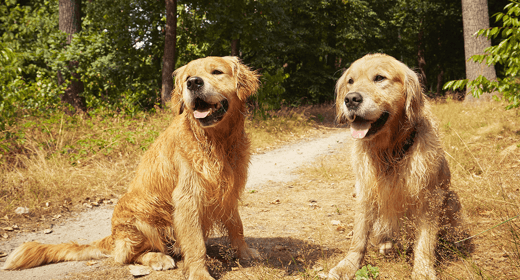
Whether your dog is a big sweetie, a big weirdo or a big athlete, here’s what you need to know about taking care of your big dog.
First, all big dogs start out as little dogs. But pretty soon they grow up — and so does their appetite, their toys, their dog bowls, the vet bill and their need for speed.
He started to grow.
And pretty soon
he was bigger than
the recliner.
Sometimes it can take more than two years for them to reach their full size.
And you won’t like to think about it too much, but their life spans are shorter, too: about 10 to 12 years.
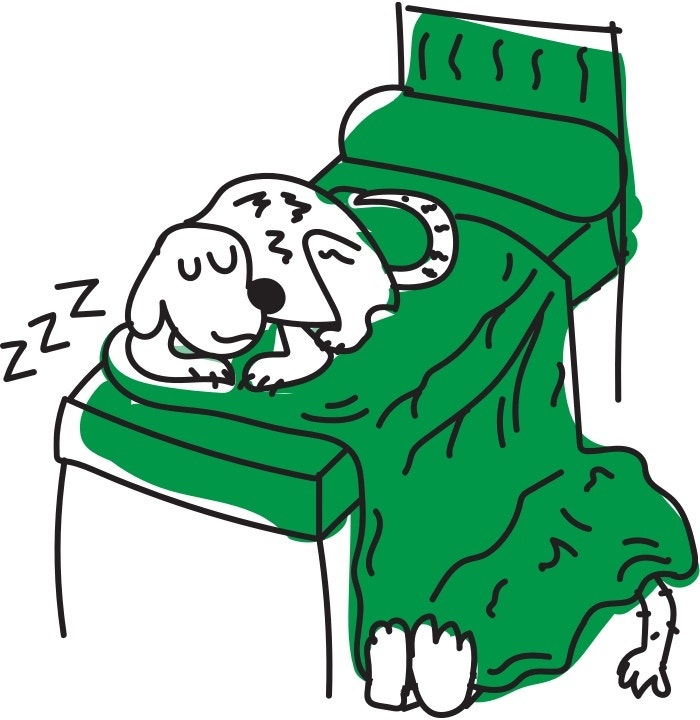
No wonder
you'll let him push
you off the bed
at night.
If a large dog gets too much food as a pup, they’re at a higher risk of growing too quickly, which can cause joint trouble.
For large breeds, being overweight is especially problematic. All that extra weight can be a lot for the joints to carry around.
Keep your good old dog healthy by practicing portion control and feeding nutritious food like IAMS™ Mature Adult Large Breed.
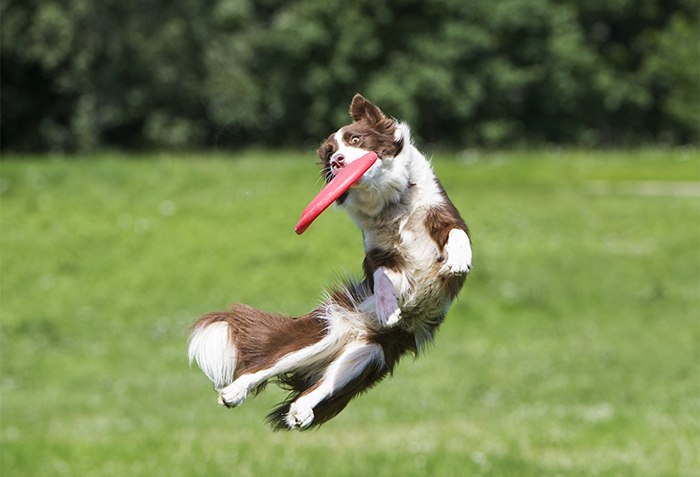
How will she catch
a screaming
15-mile-an-hour
Frisbee in midair
if she has knee trouble.
Back in the day, large-breed dogs were especially energetic. They were working dogs, herders, hunters, cart pullers and people protectors.
Who are we to deny their evolution?
Make sure your dog gets exercise every day.
How do you accomplish this? Walk, walk and more walk. And add in some running, jumping, chasing, hiking, fetching, dog-park visiting, swimming and even agility courses.
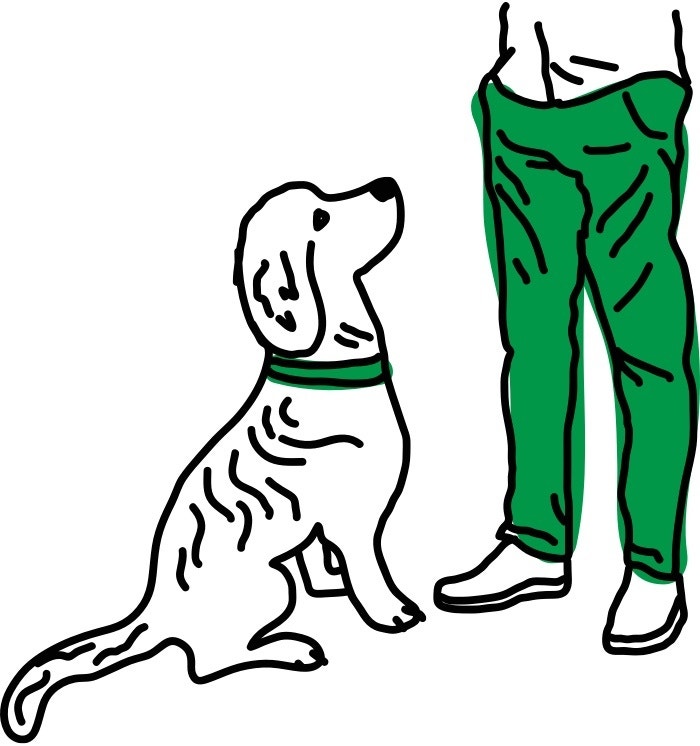
Repeat this mantra:
'I am the alpha.'
When it comes to training, think of it this way: The bigger the dog, the harder it is to hide behavior problems. And if you can’t control your super-sized soulmate, they could inadvertently cause damage or hurt someone.
Living large is all
about biting the
wind and living
that sweet,
sweet life.