Enter a keyword below to search for articles and products.
Low-cost food might be better for your wallet, but it can be a raw deal for your dog, because he may not get the nutrition he needs. Premium foods, such as IAMS™ ProActive Health™ Smart Puppy Original , make sense both nutritionally (because of consistent, high-quality ingredients) and economically because they provide:
The investment in a premium food might initially cost more per bag, but because these high-quality formulas are high in nutrient density, your dog may need less food, which can offset the higher cost per unit of weight. On a cost-per-feeding basis, look at how much you feed each day as opposed to how much the bag costs, because nutrient and energy density will generally be lower for a low-cost food compared with premium foods.
With budget-priced formulas, the emphasis is on production and ingredient costs. Two bags of the same least-cost formulated food can have different ingredients and/or levels of ingredients. Plus, those ingredients may vary significantly in digestibility. This means, simply, that you may need to feed more just to equal the nutrition offered by a smaller amount of a premium dog food formula.
High-quality, complete, and balanced premium dog foods such as the IAMS brands are specifically designed to provide your dog with a food that has:
To determine how much food to give your dog, check the daily feeding recommendations set by the pet food manufacturer and read the label. To calculate portion sizes, divide the total daily recommended amount by the number of times (usually two for adult dogs) you plan to feed your dog.
To tell if your dog is at a healthy weight, move your hands along his sides. If you can feel his ribs, he's about right. Or, look down at him when you're directly above him. You should be able to see a waistline.
If he's gaining or losing a lot of weight, slightly decrease or increase his daily intake and weigh him in another week. If you have specific concerns about your dog's weight, talk to your veterinarian. He or she can assess your dog's needs and make a feeding recommendation.
Once you've decided on a premium formula, you have another choice to make: dry or moist. And what about biscuits?
Premium dry dog food gives you the best value and convenience, while fortifying your dog with high-quality nutrition. Premium dry foods come in a number of bag sizes and formulas suited to size, life stage, and activity level. Dry food also helps keep teeth clean, and it stays fresh for a long time if you store it properly.
Wet foods from IAMS provide 100% complete nutrition. IAMS ProActive Health Puppy Biscuits make great treats and rewards and can add taste variety to your new dog's diet.
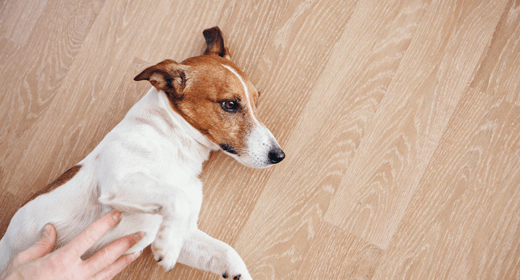
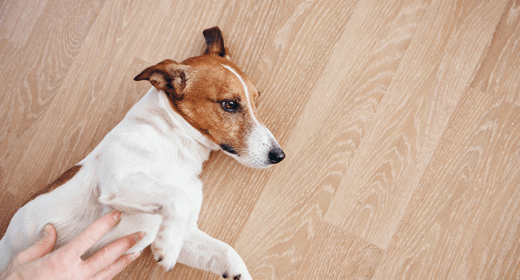
Bloat can affect any dog; however, it is observed in deep-chested, larger breeds more frequently than in others. Unfortunately, you will find that many dog owners are completely unaware of this ailment until it starts to endanger their pet’s life.
Bloat can affect any dog; however, it is observed in deep-chested, larger breeds more frequently than in others. Unfortunately, you will find that many dog owners are completely unaware of this ailment until it starts to endanger their pet’s life. Therefore, all pet owners should be aware of bloat and how to spot and respond to symptoms of bloat in dogs. So, here’s all you need to know about bloating in dogs.
Bloat is a life-threatening condition that acts rapidly and can lead to death within hours if not recognised and treated immediately. Unfortunately, the cause of bloat remains unknown at this time.
The scientific term for bloat is gastric dilatation-volvulus or GDV. Bloat is characterised by rapid and abnormal expansion of the stomach with gas (dilatation). This can be followed by rotation of the stomach (volvulus). This rotation closes both the entry to and exit from the stomach. The blood vessels also are closed, and the blood flow is restricted.
What follows is an increase in pressure inside the stomach and compression of the surrounding organs. Eventually, shock will occur as a result of the restricted blood flow. Here are a few key facts about bloat:
Bloat is a true medical emergency, and early identification and treatment is critical for survival.
In the early stages of bloat, the dog will be very uncomfortable. You might see it pacing and whining or trying unsuccessfully to get into a comfortable position. It might seem anxious, might lick, or keep staring at its stomach, and might attempt to vomit, without success.
Other indications of bloat can include weakness, swollen abdomen, and even signs of shock. Signs of shock are increased heart rate and abnormally rapid breathing.
If you notice these signs of bloat in dogs, call your veterinarian immediately!
This occurs due to gas getting trapped in the stomach region.
Gastrointestinal problems in dogs can cause excessive salivation, including esophageal diseases like megaesophagus.
Pacing and restlessness are typical signs of bloating. Your dog may even groan or whine when you press on their belly.
An abnormal swelling due to gas in your dog’s stomach can also cause respiratory distress along with a twisted belly.
Bloating can put strain on the diaphragm, a delicate muscle that divides the chest from the abdomen. This ends up making heartbeats shorter and breathing difficult.
Although veterinarians don't know what causes bloat in dogs, there are numerous factors that increase a dog's risk for this condition. These include:
These suggestions could help in preventing bloat in dogs. However, they are based on suspected risk factors and are not guaranteed to prevent the onset of bloat.
All cases of bloat in dogs require prompt medical intervention. The condition can be treated if it gets addressed quickly. In case of a simple bloat, where the dog's stomach has not twisted, the pet may be treated without any medication. They may be given fluids and certain therapies. If discovered in its early stages, other types of bloats such as GDV, may also be treatable. Surgical intervention may also be used for treatment in certain cases.
Releasing the trapped air and gas will relieve pressure on the surrounding organs and prevent the stomach's tissue from degenerating. A tube and stomach pump can be used for this; however, surgery may be required on occasion. This can aid in stomach unwinding or curing GDV in dogs.
Additionally, electrolyte-fortified intravenous fluids are also administered to improve blood flow to vital organs. In many cases, this necessitates the use of potent painkillers, antibiotics, and medications to treat the decreased blood supply to the heart due to bloating.
As soon as the dog is steady, surgery is carried out. Your veterinarian may need to untwist the dog's stomach and remove any stomach wall tissue that might have died from a lack of blood supply. The veterinarian will also perform a treatment known as a gastropexy to suture the stomach to the body wall. As a result, the likelihood of the stomach rotating in the future decreases significantly; thus, preventing bloat in dogs.
Another way you might help prevent bloat is by feed a high-quality, easily digestible food with normal fibre levels.
Feeding management offers the best method available for reducing risk until the exact cause of bloat can be identified. Although not 100% effective, these measures can reduce the number of dogs that face this serious, life-threatening condition.
IAMS™ dog food stands out as a superior and highly digestible choice for your furry companion.
If you're looking for the perfect dog for you, try our Dog Breed Selector today and enjoy a lifetime of tail-wagging joy.