Enter a keyword below to search for articles and products.
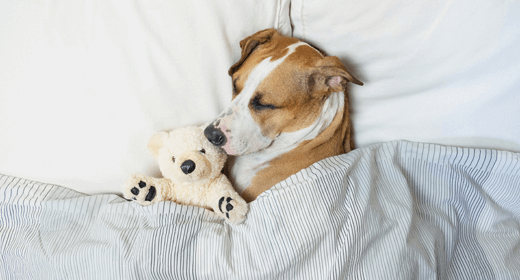
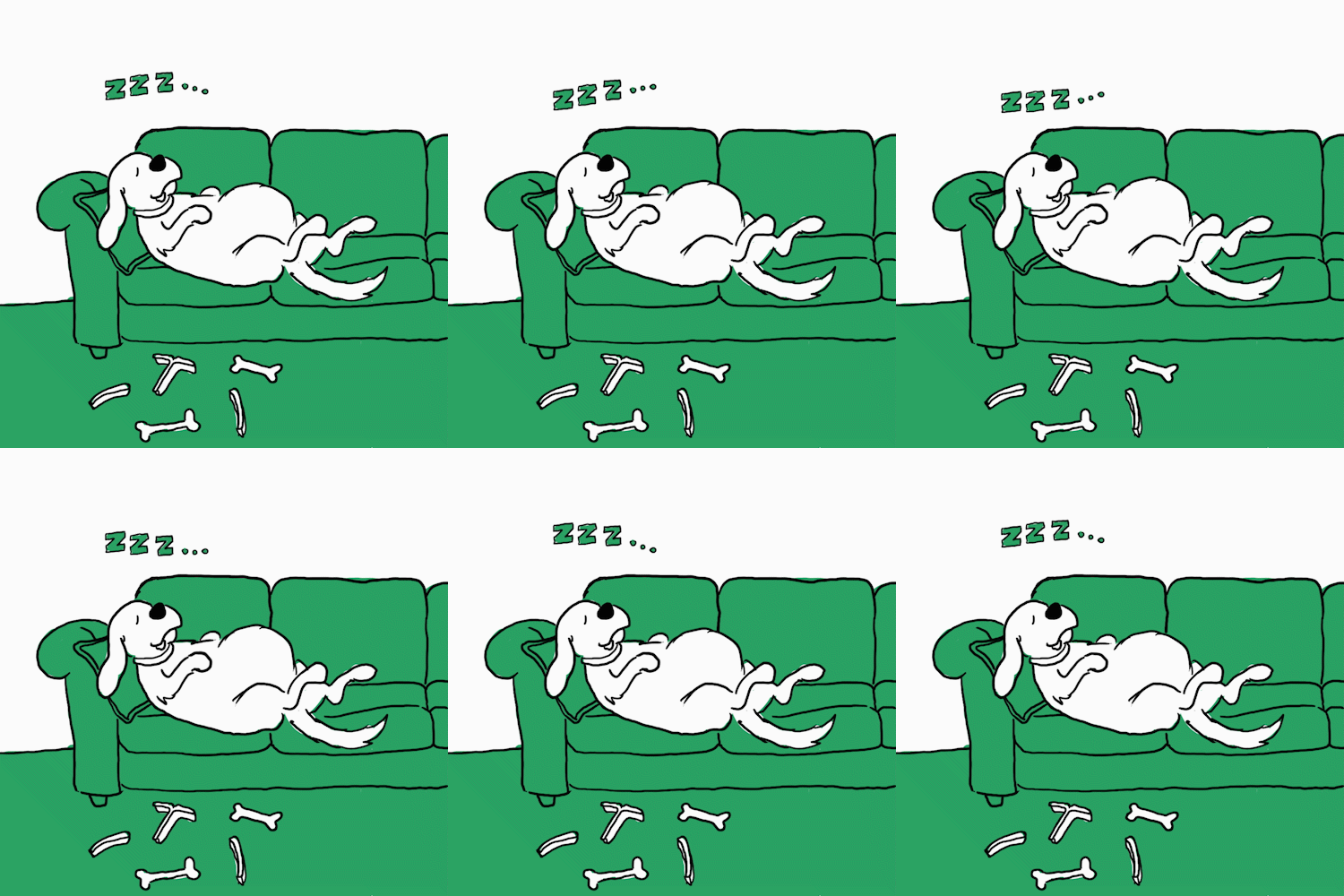
We may often envy our dogs for the kind of life they lead. Chilled, relaxed, and always well-rested. After sleeping like babies all night, dogs have the ability to nap throughout the day. You will find them basking under the sun, dozing off on the couch, or just napping next to your feet. When they do wake up after they’ve had their fat naps, they are full of energy and ready for some serious playtime.
Many animals, like dogs, sleep differently than we humans do. This is a very common reason for dog parents to wonder why my dog is always sleeping. Is my dog sleeping a lot or not enough? If you are wondering how much sleep do dogs need, there is more than one answer to this question. Just like how our sleep cycles change throughout our lives depending on our age, health, lifestyle, etc, a dog’s sleep cycle also changes depending on its age, health, and lifestyle. Keep reading to learn more about how long do dogs sleep, so it’s easier for you to understand your floof’s sleep patterns.
Dogs need a considerable amount of sleep; a lot more than we do. Additionally, carnivores like dogs sleep a lot more than herbivores since sleep is more dangerous for prey animals. The total number of hours a dog needs to sleep for varies on different factors such as its age, its health condition, and the kind of life it leads. Out of all these factors, age matters the most.
Dogs can sleep for around 12-14 hours each day, but puppies can clock in even more hours. This is because the body needs a lot of rest and repair during the first few months of life. Let’s take a look at how age affects the sleep cycle of dogs.
Puppies need to sleep for as long as their body needs to facilitate growth and repair. It is completely normal if your puppy sleeps for most of the day. In fact, puppies tend to sleep more throughout the day and less through the night.
Most adult dogs tend to sleep for anywhere between 8 to 13 hours, averaging around 11 hours each day. Yes, that’s a lot but that’s also a charm for these cute, cuddly floofs. Adult dogs tend to sleep for longer during the night depending on their and their pet parent’s schedule. However, napping for them is equally important. That being said, sleeping for a few hours during the day is absolutely normal.
Senior dogs and middle-aged dogs sleep as much as puppies. They tend to not wake up through the night and nap for a considerable number of hours throughout the day. These hours of sleep make sure that their body is well rested and recovering well as their body continues to age.
We now know that dogs, on average, can sleep for 15 hours a day irrespective of their age. However, every dog is different and will stick to a different routine which is okay. As a pet parent, you will soon understand your floof’s sleeping cycle and how its body functions.
If you do start worrying about your floof sleeping for too long, do not hesitate to contact your vet. It is always better to clear your doubts and take your furry friend to the doctor for a check-up and be sure. Another cause for concern that should be kept in mind is your dog sleeping for longer than usual. This could be a sign of underlying causes such as diabetes, dog depression, anxiety, and more. This is why a visit to the vet whenever you are worried is highly recommended.
There could be many reasons as to why your dog is sleeping so much. Our first thought is always an underlying disease that should be checked out by the vet. While this is highly recommended and also very common, many other reasons can make your dog sleep for very long.
If you’re wondering “Why is my dog always sleeping?”, the answer could be as simple as boredom. Sometimes dogs will resort to sleeping simply because they do not have anything to do. Apart from boredom, stress and anxiety are also major reasons for dogs sleeping too much. If your dog is anxious, you will notice it being lethargic and falling asleep often. The best way to combat this is to establish a routine and include some wholesome playtime.
Your dog can be susceptible to hyperglycaemia if its body is unable to produce the minimum amount of insulin needed. Certain dog breeds are at a higher risk of this disease as compared to other breeds. Visit your vet to diagnose conditions like this early and do the needful.
Viral infections in dogs are highly contagious and can affect your floof’s body greatly. Because of viral infections, your floof’s body will be unable to absorb any nutrients and will leave it dehydrated. Other than that, your floof will also suffer from a lack of protein and recovering from this disease will take some time. Resort to early puppy vaccination to keep occurrences as such at bay.
This infection caused by bacteria is highly contagious and your dog can get this disease easily through direct contact with urine from other dogs. This disease can also be passed on by humans. Again, this disease can drain your floof’s body of energy resulting in it falling asleep way too often.
Poisoning is a reason that should not be neglected by dog owners. If your dog is not trained and will eat anything palatable, it is at risk of poisoning itself. Other than that, many human foods are also poisonous to dogs. Avocados, spices, coffee, cheese, and more are foods that should not be fed to dogs, especially when you're pampering your floof.
Now that you know how much sleep do dogs need on average, you can notice any sudden changes in your dog’s sleep patterns. See a vet immediately if you suspect any illness or disease.
A dog’s sleep cycle depends on its age and lifestyle. For example, it is very normal for a puppy to sleep for around 20 hours a day since their bodies need to rest and repair.
Sometimes, dogs keep sleeping all day because they are bored. The best way to help your dogs in situations as such is to establish a routine that also includes some exciting playtime.
Judging by how much sleep do dogs need, a dog may be stressed if it is sleeping for way too long as compared to how much it should. Another sign of stress in dogs is lethargy.


With so many choices, finding a good puppy food can seem outright daunting. Well, it’s about to get a little easier. Watch as Dr. Katy Nelson takes you through the ins and outs of puppy nutrition with information on everything from age appropriate dog food, to the importance of feeding schedules.
Hi, I'm Dr. Katy Nelson with IAMS. Today we're going to talk about dog nutrition, and what you should look for in your puppy's food. Just like infants, puppies require different levels of nutrients than older dogs. Physically, puppies grow fastest during the first six months. The right nutrition is critical to support this rapid growth. That said, your puppy should only receive premium puppy food until he reaches his adult height and weight. That's typically in the first year for small and medium breeds, and can be up to two years for large and giant breeds. One more thing to consider is that a puppy's energy requirements can be nearly twice that of an adult dog. And since their stomachs are smaller, they need more nutritionally dense food formulated just for puppies to help them meet their energy needs. There are three types of food: dry kibble, semi-moist—which comes in sealed packages—and moist or canned. Most veterinarians and trainers recommend dry kibble food, because of its fat content, and the fact that moist food can spoil. Dry kibble also helps with tartar control, which is particularly important for his developing teeth. When you're shopping for food, there are a couple of things you want to look for and keep in mind. Number one, look on the label for a statement that says, 'Formulated to meet the nutritional levels established by the AAFCO dog food Nutrient Profiles for growth.' Number two, read the ingredients list on the back of the package, and look for real meat as the first ingredient. Puppies grow the fastest during the first six months of life, and because growth rates differ among breed sizes, you need to feed a formula designed to address the needs of your puppy's breed and size. Ideally, puppy food should also contain animal based protein for strong muscles. The protein requirement for growing poppies is higher than that for adult dogs. High quality protein is critical for puppies to create new body tissue as they grow. Calcium for strong bones and teeth, iron for healthy blood, DHA for the brain, central nervous system, and vision. DHA is a key ingredient found naturally in mother's milk, and is important for a baby's neural development. Just like a baby, your puppy's ability to learn depends on healthy brain development. Prebiotics for healthy immune system, because 65% of your puppy's immune system is in his digestive tract, and high in calories for all the energy a puppy burns. The nutritional needs for puppies differ for different breeds sizes. Large breed puppies grow more quickly. Because of that, they actually need less calcium, so their bones don't grow too fast. Medium breed dogs need a careful balance of calories and nutrients to be sure that they don't gain excess weight, while small breed puppies need nutrient dense food in small bites, because their metabolism tends to be faster, and they have different energy needs than larger dogs. Another important thing to know is that what is good for humans is not necessarily good for animals. Because proper nutrition is critical for optimal development, and because human food doesn't offer the proper balance of nutrients puppies need, it is important to teach your whole family that feeding your puppy or your dog table scraps is a big no-no, and a major health hazard. Now let's talk about feeding schedules. Just like babies, puppies do best on a regular schedule. Schedules teach them that there are times to eat, times to play, and times to potty. Obviously, the feeding schedule will largely be dictated by your own personal schedule. But no matter what, it is critical that puppies younger than four months be fed multiple times per day. Depending on your puppy's breed size, at around six months, you can start to limit feedings to twice a day. Also, keep in mind that eating is soon followed by the urge to go to the bathroom. If you work away from your house and are unable to feed and walk your puppy as often as needed, think about hiring a dog walker, or ask a neighbor to help you keep your puppy on his schedule. For more information on house training, watch 'How to House Train Your Puppy.' Another important nutritional determinant is how much you're supposed to feed your developing puppy. Even though the back of the puppy food bags usually have suggested portion sizes based on weight, they are not always right for your puppy. So it's best to pay attention to your puppy's body and talk to your veterinarian. Remember, a fat puppy is not necessarily a healthy puppy. Just as childhood obesity can lead to adult health issues in humans, monitoring a puppy's weight is very important to ensure proper development. Treats are another food source to consider when determining portion size. It is important to limit treating to less than 10% of your puppy's daily caloric intake. When selecting treats, hard chew treats are ideal, because they improve dental health through gnawing. Also, try to save treating for training sessions to reward good behavior, but be careful not to overdo it. For more information on training, watch our video 'Puppy training basics.' The last part of puppy nutrition we are going to talk about is water. Puppies need fresh, clean water available at all times. Like us, it is their most important nutrient. You should change your puppy's water often, at least once a day. Providing fresh, clean water greatly reduces the risk of disease, and therefore keeps your pet happy and healthy. I'm Dr. Katy Nelson for IAMS, and I hope that you found this helpful as you welcome your new addition into your family.