Enter a keyword below to search for articles and products.
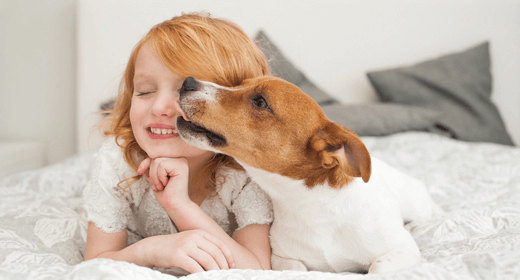
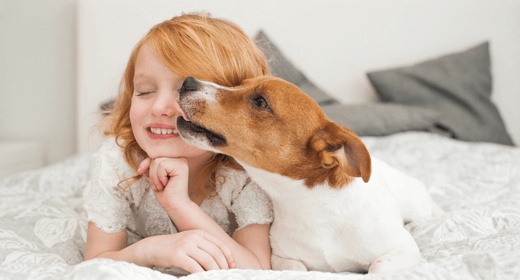
There’s no doubt that dogs are affectionate creatures. And they have numerous ways of showing it. One of these ways is by licking their owners. You may enjoy it when your furry friend comes up and gives you a big ol’ pooch smooch. But why do dogs lick you? In a poll* of dog owners, IAMS™ found a large majority (75%) believe dogs lick people to offer signs of friendliness. That’s definitely a correct assumption. Let’s dive a bit deeper for a better understanding.
Licking has been a social behaviour among dogs since the days of the great-great-great granddaddy wolf. 'It’s a standard canine greeting to lick others around the face,” agrees James Serpell, B.S., Ph.D., Professor of Humane Ethics & Animal Welfare at the University of Pennsylvania School of Veterinary Medicine. “Junior members of the pack will run around and lick the mouths of more senior members.” But is that all that there is to dog licking behaviour? Or are there more reasons why dogs lick people? Let’s find out!

Here are a few reasons that can explain why dogs like to lick.
For dogs, licking is equivalent to kissing or showing affection. You may have noticed female dogs licking their puppies which is a behaviour that is intended to show affection. And your dog considers you part of their pack, so they show you affection the same way their kind does - by licking.
Dogs are oral creatures and gather a lot of information about their surroundings through taste and smell. Maybe you’re salty after a sweaty run. Maybe you’ve got barbecue sauce on your face. “Dogs can smell a lot better than we can,” says Dr. Jo Gale, BVetMed CertLAS MRCVS, Senior Manager, Global Science Advocacy at Waltham Petcare Science Institute, “so they find a lot more things interesting to lick than we can.” This is despite the fact that dogs only have about 1,700 taste buds compared to around 9,000 in humans.
Have you been too busy with work lately? Or has anything kept you inattentive toward your pooch? If so, it’s probably one of the reasons why your dog is licking you. It is also possible that your dog just got too bored and wants you to play with them, which is why they’re suddenly licking you.
That’s true. Much like humans, dogs can also suffer from obsessive-compulsive disorder, which can be concerning. It is often triggered due to stress and anxiety and makes the dogs suddenly begin licking. You will need to visit your vet if you suspect this to be the case.
Unlike humans, no other animals have knowledge about or access to proper healthcare. So, when they get injured, their first instinct is to lick their wounds. This helps them numb the pain to a certain extent, and also clean the wound. Thus, when your dog sees a wound on you, their natural instincts kick in and they try to help you by licking the wound, thinking it will clean the wound and lower the pain.
In fact, in ancient Greece, dogs at the shrine of Asclepius were trained to lick patients. In the Middle Ages, Saint Roch was said to have been cured of a plague of sores through his dog’s licking. The French even have a saying, “langue de chien, langue de médecin,” which translates to, “a dog’s tongue, a doctor’s tongue.”
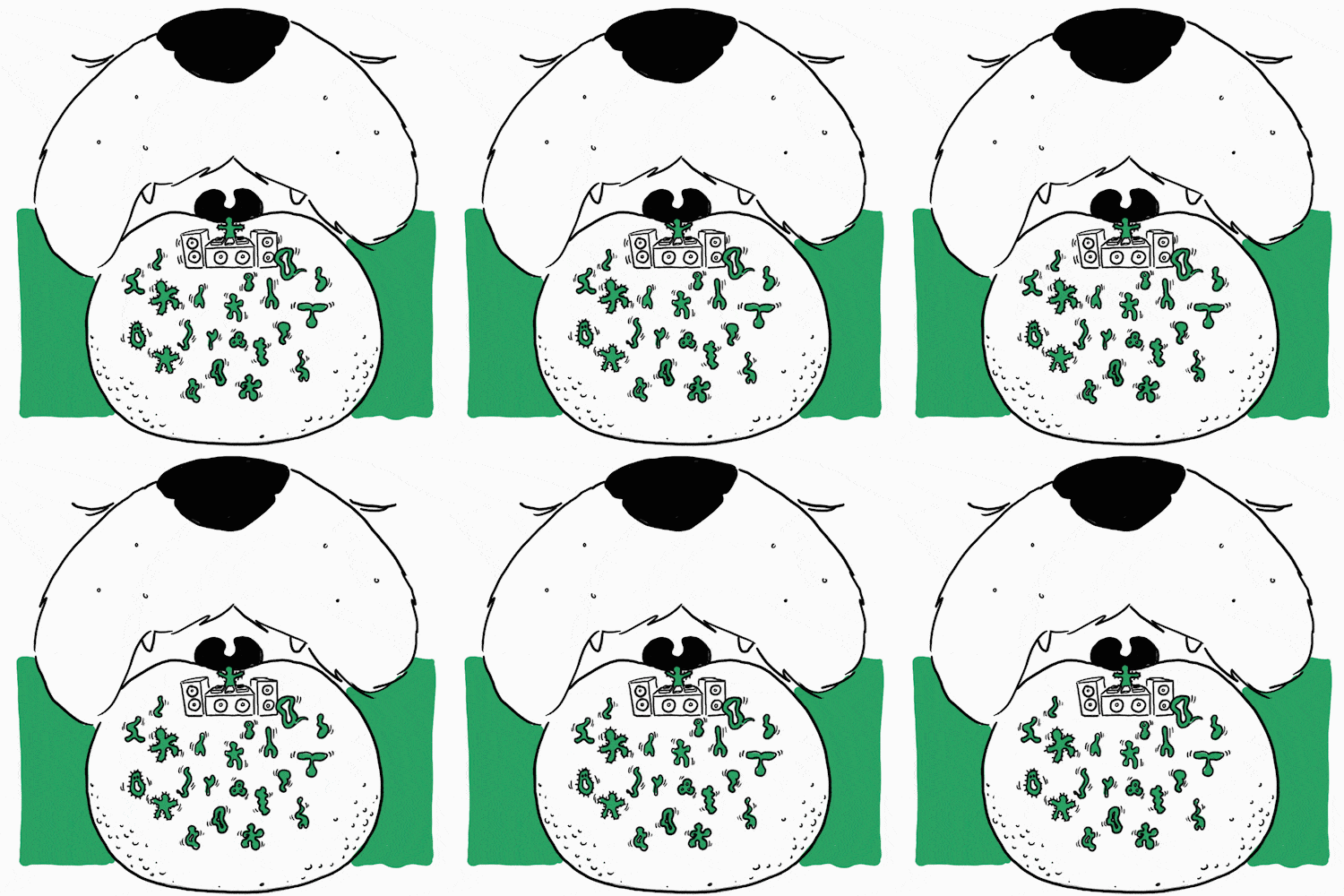
Don’t cancel your health insurance just yet. While a dog’s saliva does have some possible bactericidal properties against some types of bacteria, it can put you at risk of exposure to others. Too much licking can also reopen the wound and cause further infection. With modern medicine, you’re much better off hitting the first-aid kit. And that myth about dogs’ mouths being cleaner than humans’? Not true — both contain over 600 types of bacteria.
While an occasional canine kiss is “aww”-inducing, some dogs can overdo it to the point of annoyance. When this happens, the best thing to do is “completely ignore it and give no attention,” suggests Dr. Jo Gale. “When they stop, provide them with attention.” This acts as a form of positive reinforcement. Over time your dog will learn to scale back on the smooches. Another thing you can try is training them to cut back on the licking. Remember to use positive reinforcement in this case too - reward them with treats or toys when they display good behavior.
If you're looking for the perfect dog for you, try our Dog Breed Selector today and enjoy a lifetime of tail-wagging joy.
Yes, but not always. For dogs, licking is also a way to explore and understand the world and the beings around them. Sometimes it can also be an indication of their OCD.
Your dog may be licking you because of either of these reasons - to show affection, to seek your attention, because they like how you taste, or because they are feeling stressed or anxious.
If a dog keeps licking constantly, it may be because they are feeling anxious or stressed. Sometimes these feelings also trigger OCD in dogs, which can make them lick obsessively. They may also do it when they are bored and want your attention.
Sometimes, dogs choose to show dominance via licking. They may do this with either other dogs of the pack or with humans. Dog licking may indicate dominance especially when the licks are uninvited, and the dog begins showing dominant behaviour. This can include not obeying commands and acting in a demanding way.
A dog’s licking may indicate several things. They are either showing affection or are just bored and need your attention. They may also lick you if they think you taste good or interesting.


As a pet parent, it's hard to hear your furry friend crying. It can be due to separation anxiety, fear, or illness and can be frustrating to deal with. This article will provide practical tips on stopping your pup from crying and help them feel more comfortable and secure. We will guide you through establishing a routine and using calming aids to help your puppy stop crying and live a happier, more peaceful life.
Crying in puppies can vary depending on their age. Older puppies may cry because they are experiencing separation anxiety, are bored, or need to go outside. Meanwhile, newborn puppies cry because they are hungry, uncomfortable, or need warmth. Pay attention to why your puppy cries, so you can provide it with the right care and comfort.
If you are wondering why your pup is crying and how to put a stop to it, the key is to understand the underlying reasons. By gaining this knowledge, you can take the appropriate steps to address the problem and silence the crying. Keep reading to learn more about stopping your pup's tears.
As delicate and helpless beings, newborn puppies rely on their mothers or caregivers to provide for their basic needs. When hungry, cold, or sick, they often cry out in distress, it is like their tiny voice is seeking help. It can be heart-wrenching to hear their cries as they struggle to communicate their needs.
At this stage, the puppies must receive proper care and attention for survival. This may involve giving them warm, nutritious milk from their mothers or finding a suitable substitute if the mother cannot feed them. Providing the puppies with the necessary care will ensure their health and well-being.
In certain situations, puppies may need to receive medication or other forms of treatment to help them recover from an illness or infection. This can be a delicate and complex process, requiring close monitoring and expert knowledge to ensure that puppies receive the appropriate level of care.
As puppies grow older, they often become more vocal when they need to go outside to play or relieve themselves. This can manifest in whining or barking at the door and scratching at it with their paws to grab someone's attention. While this behaviour is natural for puppies, it can be frustrating for their caregivers, particularly when they are trying to get some rest or focus on work.
As a pet parent, providing enough exercise and mental stimulation is important to keep your puppy happy and engaged. If your older puppy is crying or whining, it could signify that they are bored and need entertainment. They may start pacing or circling the room, looking for something to do. If you notice your puppy exhibiting these behaviours, consider taking them for a walk or providing them with a fun new toy to play with.
As puppies grow older, they may become restless and cry when they are tired or ready for bed. This is typical behaviour among puppies, but it can be disruptive for the pet parent. To help your pup settle down for the night, try implementing a bedtime routine and providing a comfortable, cosy bed for it to sleep in. This will not only help your puppy feel more at ease but also allow you to get a good night's rest.
As a responsible pet parent, it's crucial to identify the reasons behind your puppy's crying and take appropriate steps. Whether it's hunger, fear, or loneliness, addressing these underlying causes can create a happier and more comfortable environment for your furry friend. By understanding the root causes of your puppy's crying, you can also provide your canine companion with necessary support and affection to help them feel loved and at ease. Here are some common reasons why puppies may cry:
Suppose your puppy is crying and showing other symptoms of illness. In that case, it could be due to several reasons, ranging from a respiratory infection to a more severe condition such as parvo or distemper. Keep an eye on your puppy's behaviour and pay attention to any changes that may indicate a health problem, so you can act quickly and prevent any potential complications. It is crucial to take your furry friend to the vet as soon as possible for a proper diagnosis and treatment, especially if the crying continues or is accompanied by other signs of discomfort or distress.
As puppies have small stomachs, they require more frequent meals than adult dogs. It's important to provide them with regular, balanced meals and snacks throughout the day to ensure their well-being and happiness. If your puppy is crying and has not eaten in a while, it may be asking for food.
If your puppy is crying, it may be because they feel lonely and neglected. To prevent this, spend quality time with your pup daily. Engage in activities like playing, training, and bonding with them to create a strong, positive relationship and prevent feelings of loneliness.
Puppies overflow with energy and require significant stimulation to stay content and healthy. If your furry friend is crying and appears restless or fidgety, it could be because they are bored and need something to do. Provide your puppy with various toys, games, and activities to keep them entertained and focused.
Suppose your puppy is crying and appears frightened. In that case, it may be because of loud noise, a scary situation, or even a sudden change in their environment. To help calm them down, try speaking softly, offering a treat, or playing soothing music. If the fear continues, seeking the assistance of a professional trainer or behaviourist may be necessary to help your puppy overcome its anxiety.
If your puppy is used to being around other dogs or people and is suddenly left alone for long periods of time, they may become lonely and cry. To prevent this, consider providing your puppy with a companion like another dog or a stuffed animal. Additionally, ensure your puppy has regular opportunities to socialise and interact with others to prevent loneliness and unhappiness.
Consoling a crying puppy can be a challenging and emotional task. Still, making your furry friend feel safe and loved is essential. Here are a few tips to help comfort a crying puppy:
To successfully comfort a crying puppy, it is crucial to have patience and an understanding of what may be causing distress. Once the source of the crying is determined, providing the appropriate support and can help stop its tears and give the puppy a feeling of safety. If needed, seeking advice from a professional can also be beneficial in these situations.