Enter a keyword below to search for articles and products.
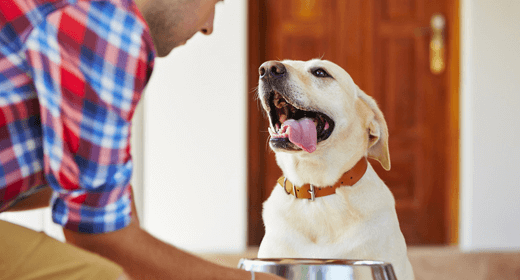
No two dogs are alike. So when choosing your pet's food, you'll want to take into consideration the dog's breed, size, age, weight, and lifestyle.
Full growth will happen at around 1 to 2 years, with the exact age determined by your dog's breed—small-breed dogs mature faster than large-breed dogs. “Grown dogs, especially ones who are more athletic, will start to eat more quantities in one feeding,” says Madan Khare, DVM. “You want to limit his feeding to one or two times a day, depending on his activity level.” Exact quantities should be determined by consulting your vet or by reading the package labels (just remember to split a daily serving). Mature dogs are prone to obesity, so it is necessary to feed them carefully. in half if you choose to feed the dog twice a day.
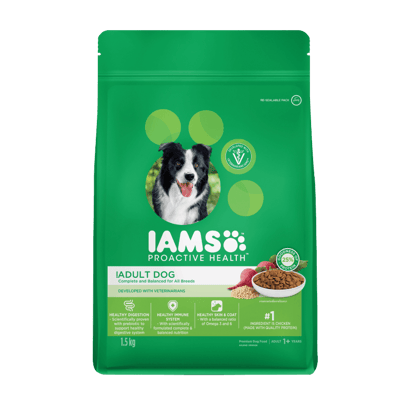
When transitioning your dog from puppy food to premium adult food—such as IAMS™ ProActive Health™ Adult Dog Food —you want to do it gradually. “Never change a dog's diet abruptly,” Khare says. Here's a schedule for transitioning your pet from puppy food to an adult dog food.
Day 1: Fill your dog's bowl with 75% puppy food and 25% premium adult dog food.
Day 2: Use 50% of each food.
Day 3: Feed your dog a mixture of 75% premium adult food and 25% of your current dog food.
Day 4: Give him 100% premium adult dog food.
Daily exercise and a diet packed with high-quality protein from chicken, lamb, or fish and essential nutrients will keep him happy and healthy throughout his lifetime. Premium dry pet food has all of the daily nutrition your pet needs. It helps promote healthy teeth and gums, too.
“When it comes to feeding your dog human food, I have three words,” Khare says. “No. No. No.” Interfering with your pet's food regimen by adding higher-fat and higher-calorie human foods can disturb the animal's digestive system. When it comes to biscuits, Khare recommends looking for ones low in sugar, salt, and fat. 'You have to keep in mind that you're adding calories to his daily diet, so offer them in moderation,” Khare says. Finally, make sure your pet has a clean bowl of fresh water at all times.
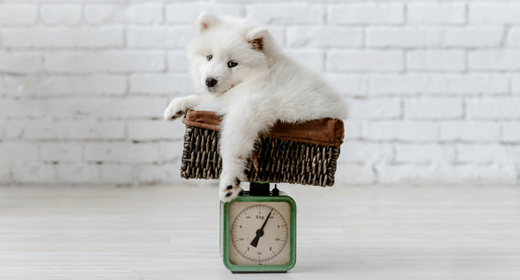
Just like in humans, obesity can lead to serious health issues in dogs as well. The primary causes of obesity in dogs are lack of physical activities, imbalanced diet, and overfeeding. If you notice a sudden increase in your dog’s weight despite having a normal diet and sufficient exercise, it could also be a sign of some hormonal disorder. Obese dogs are at risk of developing diabetes, heart diseases, bone deterioration, arthritis, and other severe disorders. Thus, it is crucial to monitor your dog’s weight.
Wondering what is the ideal weight for dogs? A dog’s healthy weight can differ from breed to breed; hence, you can consult your vet to understand the right weight range for your pet. However, the below dog weight chart will help you get an idea on whether your furry friend is underweight, healthy, or obese.
Underweight: You can clearly see an underweight dog’s ribs, spine, and hip bone. There is zero body fat and that can be seen on its body. In dogs who are genetically thin, the loss of muscle mass may be evident.
Ideal: You can easily feel the ribs, spine and hips of a dog that falls in an ideal weight category. Its waist should also be visible from above and the side. The last couple of ribs may be visible on a short-coated dog while playing or exercising, which is normal.
Overweight: A dog is considered overweight when it weighs 10-20% more than its ideal body weight. It is difficult to feel the ribs of these dogs. The fat accumulation is also visible at the base of its tail and on the belly. Its back also starts to appear broader. It is advisable to start working on shedding the extra kilos your dog has gained at this stage.
Obese: A dog is considered overweight when it weighs 20% more than its ideal weight. You cannot feel its ribs at all due to the heavy fat accumulation. Fat deposits are also visible around the dog’s neck and its belly also starts to droop.
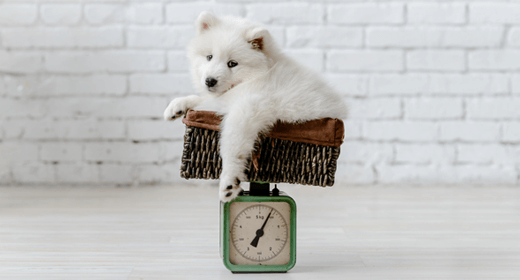
You can measure your dog’s weight at home if your dog is a small breed. Here are the steps to follow while measuring the weight of your dog at home:
These steps should not be followed by those who have medium or large breed dogs. The size of your dog could make it difficult for you to hold it properly, and if it starts fidgeting, the handler or the dog could get injured. Hence, owners of medium and large breed dogs should go to the vet to weigh their pet.
You can easily manage your dog’s weight and maintain the ideal weight of your dog if you follow a regime and take the necessary steps. Here’s are some things you should keep in mind during your dog’s weight management:
Dogs remain healthy if their food quantity is controlled and they are fed on time. But you should avoid feeding your dog home-cooked food. Wondering why? It is because home-cooked meals might not have the right nutrients in the right quantities and that can later affect your furry friend’s overall health. Hence, to keep such risks at bay, it is best that you avoid feeding home-cooked food. In case you plan on giving your dog home-cooked meals, it is imperative that you follow the recipe to the T.
Your dog is your friend so, it's hard not to share your delicious bacon or a mouthful of steak with it. When your dog sits next to you and makes those adorable puppy-dog eyes as you eat, it becomes even more difficult to not share some of your food with it. But you must resist. Giving “human food” greatly increases your dog’s fat intake. It also conditions the dog to believe that it will be fed every time you eat.
Exercise is a great way to keep your dog in shape. If you have a busy schedule, then you could break it down into short sessions to play fun games like tug-of-war or go for a quick jog with your dog. You could also play with a frisbee or start working on its agility. Dogs that get enough exercise are less likely to be stressed and this way, you would also get a break from your work.
Of course, you want to reward a dog when it’s been a good boy or a good girl. But keep in mind that those dog treats can add calories and fat. And more importantly, think about how many types of treats and snacks you are feeding your dog and how often.
Of course, you want to reward a dog when it’s been a good boy or a good girl. But keep in mind that those snacks can add calories and fat. And more importantly, think about how many types of treats and snacks you are feeding your dog and how often.
There are lots of dog foods available in the market and each pack contains different quantities of proteins, vitamins, minerals, and other nutrients. You must go for foods that provide complete nutrition to your furry friend, and not just calories. Hence, it is necessary to opt for a pet food brand that specialises in dog nutrition.
At IAMS™, we have been focusing on bringing out the best in your dog through healthy food. Explore our range of dog food and choose a product that best suits your dog’s size and age. However, consult your vet regarding the serving size and other details. A vet will also provide you with the tips and tricks on keeping your dog’s weight under control.
If you're looking for the perfect dog for you, try our Dog Breed Selector today and enjoy a lifetime of tail-wagging joy.