Enter a keyword below to search for articles and products.
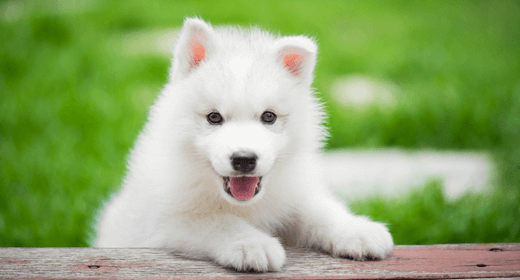
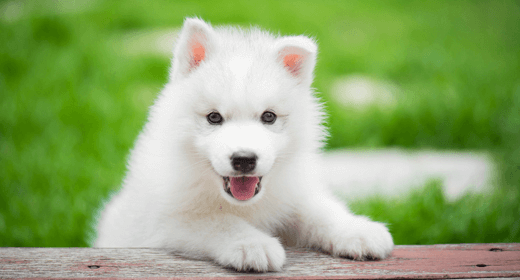
Puppies like human babies need additional love, care, and support in their growing age. The first month of a new puppy is critical as it needs the best healthcare, nutrition, and love to grow into a healthy and cheerful dog. Puppy health becomes the primary responsibility of pet parents during this stage. They must ensure preventive care and medical support alongside providing proper nourishment. To know more about the puppy health checklist, read the following.
Maintaining puppy health is the foremost important duty of every pet parent. Consulting a vet, vaccinating, neutering, and availing regular healthcare check-ups are a few duties of puppy caregivers. Similarly, other puppy preventive care includes:
Medical and preventive care is extremely necessary for puppies. Younger puppies are too small to understand what is good or bad for them. Besides, they are also very curious, playful, and energetic during their initial years. This playful and curious nature can sometimes lead to harmful situations.
Puppies often play and munch on random objects, which can sometimes result in toxication. In fact, accidents are also common in puppies as they lack cognitive skills to measure the consequences of their action. Hence, pet parents should pay more attention to their puppy’s growth and development. Some essential puppy health recommendations are as mentioned:
Apart following puppy health checklist, pet parents also need to ensure their fur baby is provided with other basic facilities for their overall growth and development. Training and socializing are as important as providing the best healthcare.
Besides, potty training and command training establishes hygiene and good behavior in them from a young age. To conclude, puppy health, fitness, and training are some of the most essential aspects for the overall growth and development of puppies.
Observe the puppy daily to look for signs of discomfort, illness, and abnormalities. If you notice a major shift in the puppy’s mood or changes in physical attributions, stool, fur, and other attributes, then consult a vet at the earliest. However, if everything looks and feels normal then you have a healthy puppy.
Soft and shiny fur, clean ear, bright eyes, a clear nose, and a playful mood are some essential signs of a healthy puppy.
Diarrhea, vomiting, itching, whimpering, and loss of energy are some signs of a sick puppy.
Parasites, kennel cough, parvovirus, vomiting, and diarrhoea are some common illnesses in puppies.
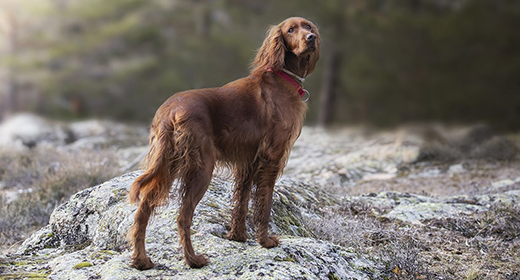
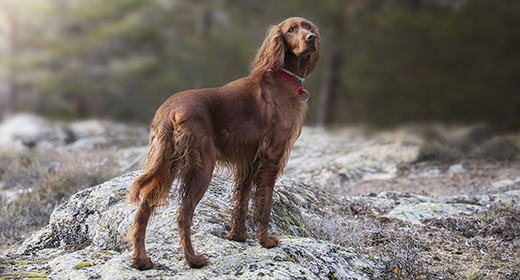
Many factors influence the overall health of your dog’s skin and coat: His diet and grooming schedule, the presence of parasites and seasonal changes can all play a role. Whether your dog is prone to skin issues or you want to ensure your pup’s health for years to come, you’ll need to keep a few key things in mind.
Regular veterinary checkups will ensure that your dog is disease- and parasite-free. Flea-bite allergy and external parasites, such as mange, are primary causes of hair loss and skin problems.
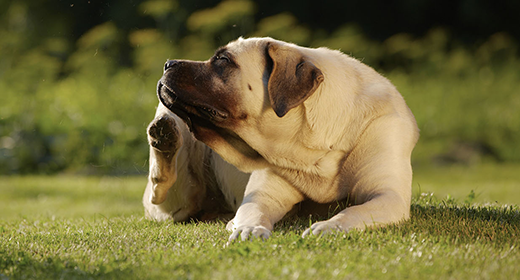
In addition to scheduling checkups, check your dog’s hair and skin at least once a week for signs of fleas (flea dirt or bites), mange or other skin conditions, and hair loss.
If your dog’s skin seems thick or scaly or lacks elasticity, or if you notice hair loss, these signs might indicate a nutritional deficiency. Check with your veterinarian, and try feeding him a premium food. It will usually take between six and eight weeks after a diet change to see results. If your pet continues to scratch and chew his skin, consult a veterinarian.
When looking for a dog food that will promote good skin and coat health, keep the following in mind:
What's the best thing you can do for your dog’s skin and coat health? Feed a high-quality food packed with protein, such as IAMS™ ProActive Health™ Adult MiniChunks. Dogs are best fed as carnivores: They need protein and thrive on diets rich in animal-based protein sources. Additionally, their hair is actually 95% protein! Although coat growth varies by breed, the combined growth of all the hair can add up to 100 feet per day in some dogs. This means that nearly 30% of the animal’s daily protein requirement is used just for coat growth during some seasons.
Premium pet foods are carefully formulated to be complete and balanced, which means the food includes all of the nutrients your pet needs. Ingredients in premium foods are highly digestible so your dog's body uses the nutrients efficiently. Less costly foods might contain lower-quality proteins. Though a bag of premium food may cost a bit more than other brands, you might be able to feed less, which minimizes the cost difference.
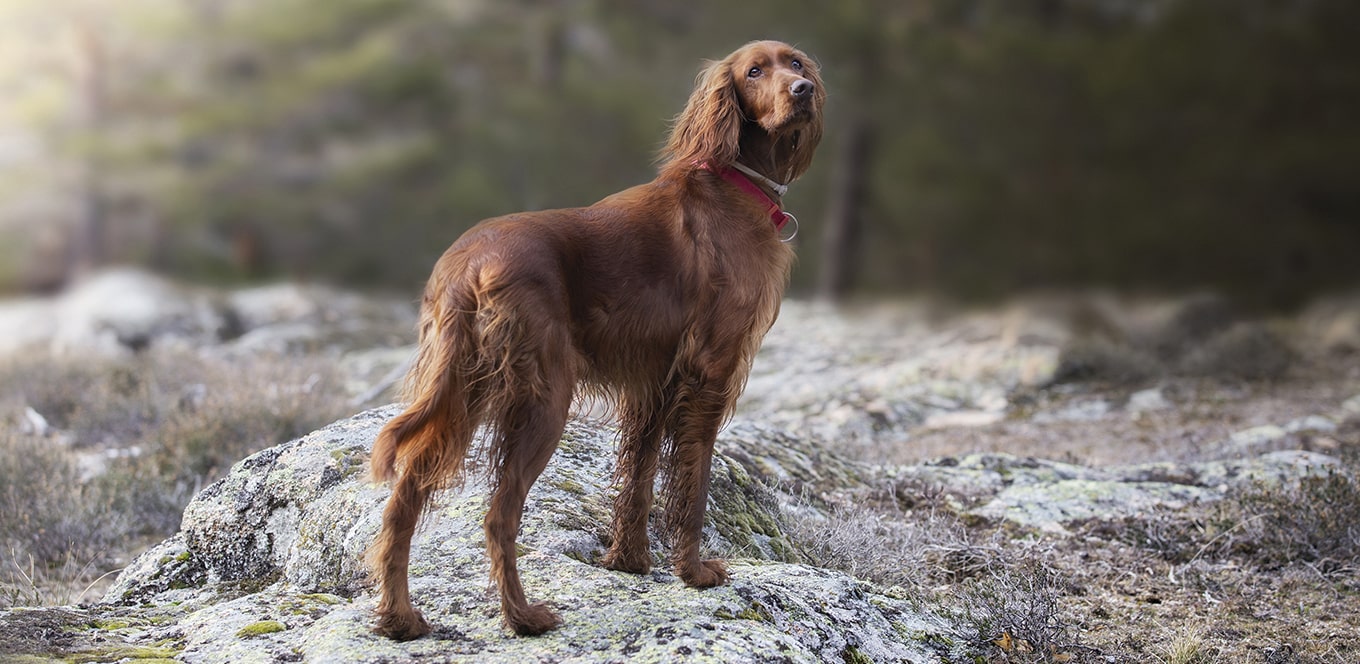
It’s easy to spot a healthy-looking dog: He has a gleam in his eye, a bounce in his step and a glossy, healthy coat. That glow is a reflection of your dog’s overall health and a good gauge of what’s going on inside and outside.
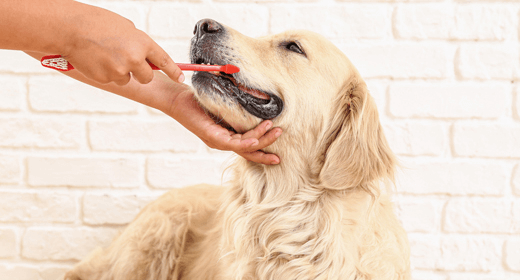
Regular grooming helps take care of the “outside” by removing loose hair, dirt and mats, and distributing skin oils. Grooming lets you check your pet closely, catching any skin problems early. Plus, your dog will love the attention!
As dogs age, their skin might become more sensitive. Select a mild dog shampoo for your older dog. Shampoos made from coconut or palm oils are the mildest. Unusual or “doggy” odors can signal disease, so if odors persist, contact your veterinarian. Do not use human shampoos because they are often too harsh for a dog’s skin.
When bathing your dog, be sure to rinse him thoroughly. Residue left on the skin can be irritating. You might want to follow the shampoo with a hair conditioner to control static electricity and add extra body or sheen.
During the summer, pay close attention to your dog’s skin and coat. Many dogs shed a winter coat and others face flea problems, so it’s a good time to evaluate your dog’s skin and coat condition to nip any problems in the bud.
Attention to your dog's coat and skin from the inside out will produce a healthy, lively dog that is a joy to look at — and a pleasure to live with — every day!