Enter a keyword below to search for articles and products.
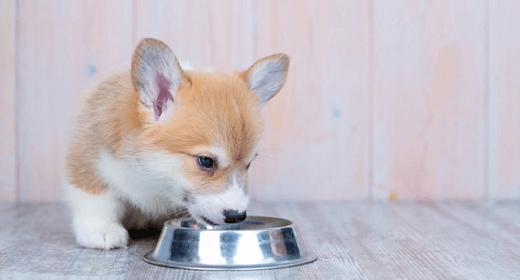
Your puppy is changing in so many ways. In fact, the most rapid growth will take place in these first months of his life. His immune system is developing. Bones are growing. Muscles are getting stronger. All of this requires a nutrient-dense diet, formulated to support a medium-breed puppy's rate of development. To make sure your puppy is getting optimal nutrition to protect and maintain health and well-being, here are some key points to keep in mind.
From the time your puppy is weaned until 4 months of age, you should feed your puppy two to three meals a day, with the daily amount based on the guidelines of the food label. After 4 months of age, he should be fed twice a day on a regular schedule. Always have fresh water available.
Research shows that puppies need up to twice as much energy as adult dogs. Dramatic growth at this stage means your puppy requires an energy-rich, nutrient-dense complete and balanced diet. Puppies also require more protein than adult dogs. High-quality animal-based protein will help your puppy create new body tissue.
Not all puppies have the same nutritional needs. Medium-breed puppies actually have slightly higher metabolism rates per pound than large-breed puppies. And your puppy will reach his mature adult weight at about 12 months, sooner than larger breeds that reach adulthood as late as 24 months. Your puppy needs protein, fat, calcium, and phosphorus to support growth and development of bones, muscles, and other tissues. So giving him a food that supports his medium size is the easiest way to help make sure he's getting the right balance of nutrients for his metabolism and growth rate.
Remember, puppies have small stomachs. Make sure his food is nutrient-dense so he'll get a complete and balanced diet even though his stomach can only handle what seems like a small volume of food.
Aside from energy and protein, there are other important nutrients and ingredients vital to your puppy's diet:
These are important building blocks of nutrition. Look for them when you choose dry or canned dog food and when you select treats.
A medium-breed puppy reaches adult weight by about 12 months. You can begin feeding an adult dog food at this time, such as IAMS™ ProActive Health™ Adult MiniChunks. Your dog might not welcome the change at first, but don't worry. You can help ease the transition by gradually introducing the adult food. Try mixing 25% of the new food with 75% of his puppy food, then gradually change the proportions over the next three days until he's eating 100% adult food.


Puppies like human babies need additional love, care, and support in their growing age. The first month of a new puppy is critical as it needs the best healthcare, nutrition, and love to grow into a healthy and cheerful dog. Puppy health becomes the primary responsibility of pet parents during this stage. They must ensure preventive care and medical support alongside providing proper nourishment. To know more about the puppy health checklist, read the following.
Maintaining puppy health is the foremost important duty of every pet parent. Consulting a vet, vaccinating, neutering, and availing regular healthcare check-ups are a few duties of puppy caregivers. Similarly, other puppy preventive care includes:
Medical and preventive care is extremely necessary for puppies. Younger puppies are too small to understand what is good or bad for them. Besides, they are also very curious, playful, and energetic during their initial years. This playful and curious nature can sometimes lead to harmful situations.
Puppies often play and munch on random objects, which can sometimes result in toxication. In fact, accidents are also common in puppies as they lack cognitive skills to measure the consequences of their action. Hence, pet parents should pay more attention to their puppy’s growth and development. Some essential puppy health recommendations are as mentioned:
Apart following puppy health checklist, pet parents also need to ensure their fur baby is provided with other basic facilities for their overall growth and development. Training and socializing are as important as providing the best healthcare.
Besides, potty training and command training establishes hygiene and good behavior in them from a young age. To conclude, puppy health, fitness, and training are some of the most essential aspects for the overall growth and development of puppies.