Enter a keyword below to search for articles and products.
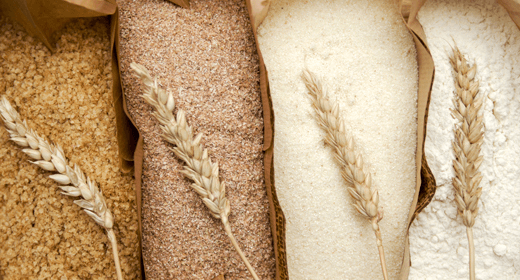
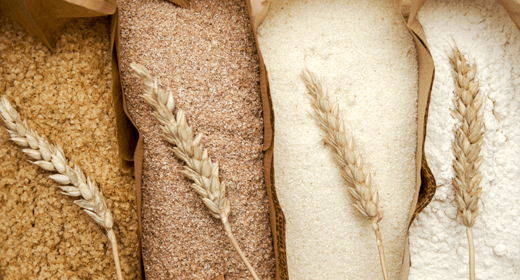
Wheat is a grain used as a high-quality carbohydrate source in dry dog foods and biscuits. It provides energy for daily activity, as well as processing characteristics for the food. IAMS™ research has shown that including wheat in a complete and balanced diet results in a moderate glycemic response in dogs, which is lower, in general, than the response observed when a rice-based diet was fed. 1,2
A common misconception is that feeding wheat causes food allergies. The facts are:
Gluten (a protein found in wheat) is responsible for wheat-sensitive enteropathy, occasionally found in Irish Setters from the United Kingdom. Gluten enteropathy of Irish Setters is a malabsorption syndrome, which responds to the removal of wheat (gluten) from the diet. This condition is very rare, and the reason some dogs develop it is not yet clear.
1 Sunvold GD. “The role of novel nutrients in managing obesity.” In: Recent Advances in Canine and Feline Nutrition, Vol II: 1998 IAMS Nutrition Symposium Proceedings. Carey DP, Norton SA, Bolser SM, eds. Wilmington, OH: Orange Frazer Press, 1998; 123–133.
2 Bouchard GF. “Effect of dietary carbohydrate source on posprandial plasma glucose and insulin concentration in cats.” In: Recent Advances in Canine and Feline Nutrition, Vol III: 2000 IAMS Nutrition Symposium Proceedings. Reinhart GA, Carey DP eds. Wilmington, OH: Orange Frazer Press, 2000; 91–101.
3 Jeffers JG. “Responses of dogs with food allergies to a single-ingredient dietary provocation.” J Am Vet Med Assoc. 1996, vol 209(3): 608–611.
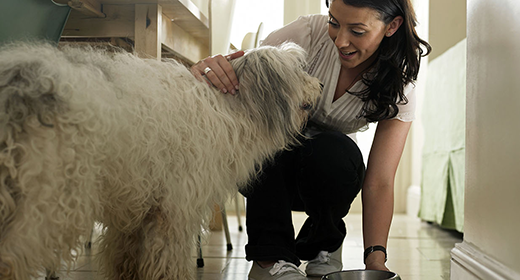
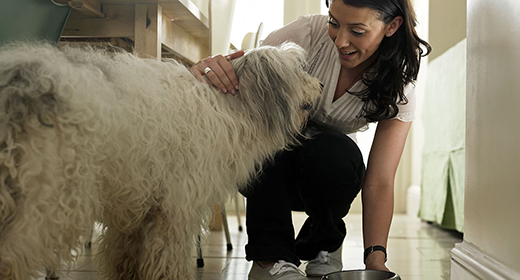
Dogs hit maturity around 7 years of age (5 years for larger dogs). It's not uncommon for them to live as long as 15 years. As your pet enters his golden years, his activity level might slow down and common conditions such as arthritis, diabetes, and kidney disease may arise. “It is so more important to monitor the eating habits of older pets,” stresses Tom Carpenter, DVM, president of the American Animal Hospital Association. “Generally, older pets do not need as much protein, sodium, and phosphorus. But your veterinarian needs to address this for your individual pet,” he says, adding that semiannual vet visits are recommended for an older animal.
Some mature dogs are prone to obesity. To test whether your dog is at a healthy weight, move your hands along his sides. If you can feel his ribs (but don't see them), he's doing okay. But if you feel a fat covering, or you visibly notice a rounded abdomen, he might be overweight. Exercise is still important for a senior dog, and if he's gained weight, you want to look for a low-fat weight-control food that contains vitamin-rich fish oils (IAMS™ ProActive Health™ Mature Adult is one good choice).
Other mature pets can become finicky eaters and lose weight as they age. 'Very old pets may actually need a more calorie-dense diet,' Carpenter says. Older dogs can lose their sense of smell and have a harder time chewing their food. To make mature dog food easier to eat, you can top their dry food with room-temperature wet food.
If your dog is gaining or losing a lot of weight, slightly decrease or increase his daily feedings. A sudden change in weight or appetite might be a sign of disease, so you should check with your vet. Water is also essential. 'Older pets are at a higher risk of dehydration,' Carpenter says. Provide a clean bowl with fresh water at all times.