Enter a keyword below to search for articles and products.
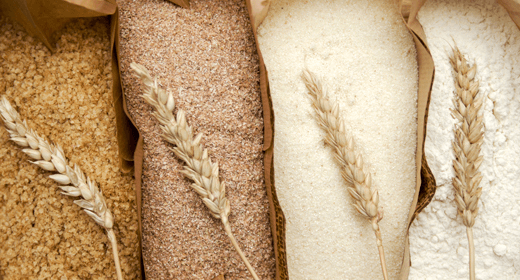
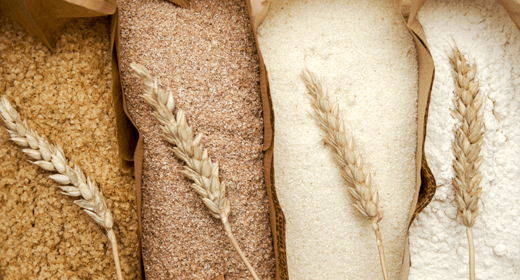
Wheat is a grain used as a high-quality carbohydrate source in dry dog foods and biscuits. It provides energy for daily activity, as well as processing characteristics for the food. IAMS™ research has shown that including wheat in a complete and balanced diet results in a moderate glycemic response in dogs, which is lower, in general, than the response observed when a rice-based diet was fed. 1,2
A common misconception is that feeding wheat causes food allergies. The facts are:
Gluten (a protein found in wheat) is responsible for wheat-sensitive enteropathy, occasionally found in Irish Setters from the United Kingdom. Gluten enteropathy of Irish Setters is a malabsorption syndrome, which responds to the removal of wheat (gluten) from the diet. This condition is very rare, and the reason some dogs develop it is not yet clear.
1 Sunvold GD. “The role of novel nutrients in managing obesity.” In: Recent Advances in Canine and Feline Nutrition, Vol II: 1998 IAMS Nutrition Symposium Proceedings. Carey DP, Norton SA, Bolser SM, eds. Wilmington, OH: Orange Frazer Press, 1998; 123–133.
2 Bouchard GF. “Effect of dietary carbohydrate source on posprandial plasma glucose and insulin concentration in cats.” In: Recent Advances in Canine and Feline Nutrition, Vol III: 2000 IAMS Nutrition Symposium Proceedings. Reinhart GA, Carey DP eds. Wilmington, OH: Orange Frazer Press, 2000; 91–101.
3 Jeffers JG. “Responses of dogs with food allergies to a single-ingredient dietary provocation.” J Am Vet Med Assoc. 1996, vol 209(3): 608–611.


A product code is a series of numbers and letters printed on the outer package of each product that a manufacturer produces to provide information about when the product was made.
As part of the product code, products manufactured by The IAMS™ Company include a 'Best Used By' date, or the date at which the product is no longer considered fresh and should no longer be sold. This date is expressed in “ddmmyy” and “ddmmmyy” formats (line 1 below).
The second line represents company internal information for use in traceability and inventory control (line 2).
Depending upon the production line, pouch products might have code date information in a single or double line.
By recognizing and understanding these codes, customers can make sure they are receiving a fresh product.
Shelf life is the duration, measured in months, during which a product that is stored properly maintains its freshness. This means that if a product has a 16-month shelf life, it is fresh for up to 16 months from the date of manufacture.
The shelf life for our dry dog and cat foods is 16 months. All canned and pouch formulas have a shelf life of 24 months. Biscuits have a 12-month shelf life, and sauce formulas have a 16-month shelf life.
Unopened dry products are best stored off of the floor in a cool, dry place. Open bags of food should be stored in a clean, dry container with a tight seal. Dry products also might be frozen without loss of nutrients.
Opened wet products are best kept refrigerated in tightly sealed containers for no more than three days after the can has been opened. Wet products should not be frozen in unopened cans or pouches. However, wet foods can be frozen if removed from the container, packed in freezer containers and frozen immediately.