Enter a keyword below to search for articles and products.
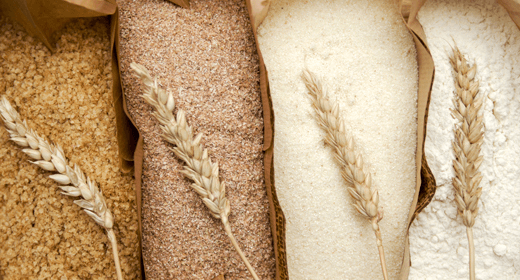
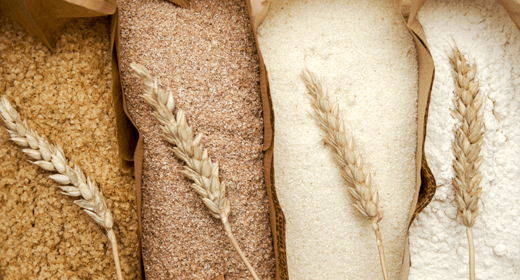
Wheat is a grain used as a high-quality carbohydrate source in dry dog foods and biscuits. It provides energy for daily activity, as well as processing characteristics for the food. IAMS™ research has shown that including wheat in a complete and balanced diet results in a moderate glycemic response in dogs, which is lower, in general, than the response observed when a rice-based diet was fed. 1,2
A common misconception is that feeding wheat causes food allergies. The facts are:
Gluten (a protein found in wheat) is responsible for wheat-sensitive enteropathy, occasionally found in Irish Setters from the United Kingdom. Gluten enteropathy of Irish Setters is a malabsorption syndrome, which responds to the removal of wheat (gluten) from the diet. This condition is very rare, and the reason some dogs develop it is not yet clear.
1 Sunvold GD. “The role of novel nutrients in managing obesity.” In: Recent Advances in Canine and Feline Nutrition, Vol II: 1998 IAMS Nutrition Symposium Proceedings. Carey DP, Norton SA, Bolser SM, eds. Wilmington, OH: Orange Frazer Press, 1998; 123–133.
2 Bouchard GF. “Effect of dietary carbohydrate source on posprandial plasma glucose and insulin concentration in cats.” In: Recent Advances in Canine and Feline Nutrition, Vol III: 2000 IAMS Nutrition Symposium Proceedings. Reinhart GA, Carey DP eds. Wilmington, OH: Orange Frazer Press, 2000; 91–101.
3 Jeffers JG. “Responses of dogs with food allergies to a single-ingredient dietary provocation.” J Am Vet Med Assoc. 1996, vol 209(3): 608–611.


The timeline for feeding your puppy changes rapidly over the first six months. Learn what and how you should feed your puppy based on the key development milestones she will experience.
Due to breed differences and animal individuality, it is impossible to predict exact dates for a puppy’s growth and development milestones. However, by using the following milestones as a guide for healthy growth, developmental problems can be spotted — and possibly prevented — early on. By knowing these milestones, you’ll also know when your puppy is ready to begin weaning.
| Age | Milestone |
|---|---|
| 7-10 days old | Puppies double their birth weight. Puppies begin to urinate and defecate on their own. |
| 10-18 days old | Puppies attempt to stand. Puppies’ eyes begin to open. Puppies’ ears begin to open. |
| 18-21 days old | Puppies hear and respond to noises. Puppies begin to walk. |
| 3 weeks old | Begin weaning process for orphaned puppies. Puppies begin responsive vocalization. Deciduous (baby) teeth will begin erupting. |
| 4 weeks old | Begin weaning process for mother-fed puppies. |
| 3–6 months old | Puppies’ adult teeth erupt. |
When your puppy is ready to begin weaning (at around 4 weeks for mother-fed puppies and 3 weeks for orphaned puppies), use this step-by-step process:
The entire process should take approximately three weeks.