Enter a keyword below to search for articles and products.
Oral care is a key component of your pet’s overall health: A smart regimen can help prevent the development of serious conditions. Keeping your pet’s teeth clean and bacteria-free results in more than just healthy teeth and fresh breath. With a little know-how and effort, you can protect your pet for a lifetime of companionship.
Tartar and gingivitis are the most common problems seen by veterinarians. The majority of dogs will develop these problems. Unchecked, these can lead to periodontitis and serious health concerns for your pet, up to and including, tooth loss and serious illness. But you can take action to control this and promote good oral health by incorporating the 3Ds: Daily Brushing, Dentistry. and Diet.
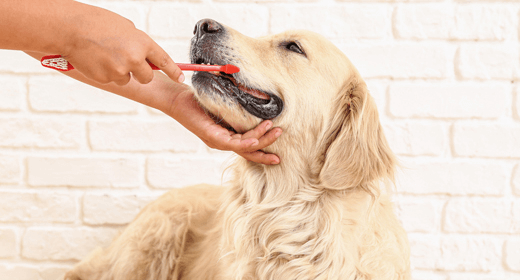
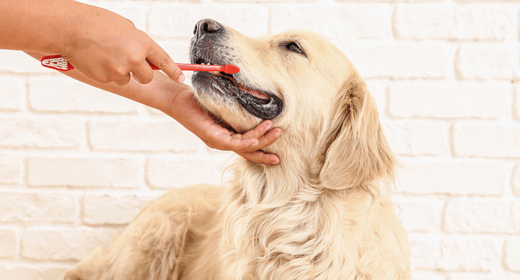
Daily brushing of your pet’s teeth will remove plaque and slow the development of tartar. When first beginning to brush, be gradual and make it a pleasant experience. Start by using your finger. Later, introduce a toothbrush. Be sure to praise and reassure your pet while brushing. Also, reward your pet afterward with play or a walk.
Talk with your veterinarian about annual or semiannual teeth cleaning—a dental prophylaxis or prophy for short. Teeth cleaning, performed by your veterinarian, is the only way to remove tartar.
Diet is important to good oral health. The mechanical, brushing action of dry, crunchy kibbles helps remove plaque and works to scrub teeth clean. Some diets also might include ingredients such as hexametaphosphate (HMP) that can help block tartar formation. Diet, daily brushing, and dentistry helps break the plaque-to- tartar cycle and optimize oral health.


Congratulations! You're the proud owner of a puppy. It's important to take steps now to ensure great puppy health. Louise Murray, DVM, director of the ASPCA's Bergh Memorial Animal Hospital in New York City and author of Vet Confidential (Ballantine, 2008), offers these pointers for your puppy's first year.
Talk to friends to find a veterinarian you can trust. Within a week of bringing your puppy home, take him for a checkup. The doctor will perform a physical and start keeping a detailed medical history.
The overvaccination of pets is currently a hot topic, Murray says. The question is, however, not whether to vaccinate but which vaccines to use and how often. What she calls the 'core vaccines'—those for parvovirus, distemper, adenovirus type 2, and rabies—are essential. 'These shots protect your dog from diseases that are very real, very common, and very dangerous,' she says. Additional vaccines may be necessary based on where you live, where you take your dog, and whether you travel.
Choose a reputable brand of dog food and discuss your choice with your veterinarian. In his first year, your puppy will be on food that is specifically geared toward younger dogs and will likely eat three times a day rather than once or twice.
An excellent measure against pet overpopulation, this procedure ideally should be performed between ages 4 and 5 months, which is before a female dog goes into her first heat and before a male enters puberty. A female dog who is spayed before going into heat is 2,000 times less likely to get breast cancer, Murray says. Males who are neutered before entering puberty have fewer behavioral issues, such as aggression toward other dogs and urine marking.
Puppy Health: Flea, Tick, and Heartworm Medicines
Most dogs should be on medicine year-round to prevent heartworm, a life-threatening parasitic infestation, Murray says. Fleas, often seen as just an annoyance, can actually cause severe skin problems and even anemia. Ticks carry multiple diseases (including Lyme disease and Rocky Mountain Spotted Fever). Your veterinarian can prescribe effective preventives for these two problems.