Enter a keyword below to search for articles and products.
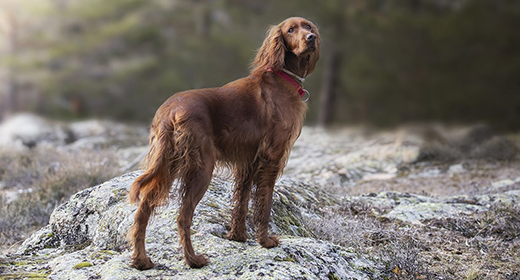
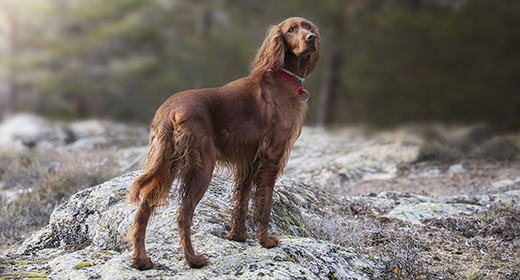
Many factors influence the overall health of your dog’s skin and coat: His diet and grooming schedule, the presence of parasites and seasonal changes can all play a role. Whether your dog is prone to skin issues or you want to ensure your pup’s health for years to come, you’ll need to keep a few key things in mind.
Regular veterinary checkups will ensure that your dog is disease- and parasite-free. Flea-bite allergy and external parasites, such as mange, are primary causes of hair loss and skin problems.
In addition to scheduling checkups, check your dog’s hair and skin at least once a week for signs of fleas (flea dirt or bites), mange or other skin conditions, and hair loss.
If your dog’s skin seems thick or scaly or lacks elasticity, or if you notice hair loss, these signs might indicate a nutritional deficiency. Check with your veterinarian, and try feeding him a premium food. It will usually take between six and eight weeks after a diet change to see results. If your pet continues to scratch and chew his skin, consult a veterinarian.
When looking for a dog food that will promote good skin and coat health, keep the following in mind:
What's the best thing you can do for your dog’s skin and coat health? Feed a high-quality food packed with protein, such as IAMS™ ProActive Health™ Adult MiniChunks. Dogs are best fed as carnivores: They need protein and thrive on diets rich in animal-based protein sources. Additionally, their hair is actually 95% protein! Although coat growth varies by breed, the combined growth of all the hair can add up to 100 feet per day in some dogs. This means that nearly 30% of the animal’s daily protein requirement is used just for coat growth during some seasons.
Premium pet foods are carefully formulated to be complete and balanced, which means the food includes all of the nutrients your pet needs. Ingredients in premium foods are highly digestible so your dog's body uses the nutrients efficiently. Less costly foods might contain lower-quality proteins. Though a bag of premium food may cost a bit more than other brands, you might be able to feed less, which minimizes the cost difference.
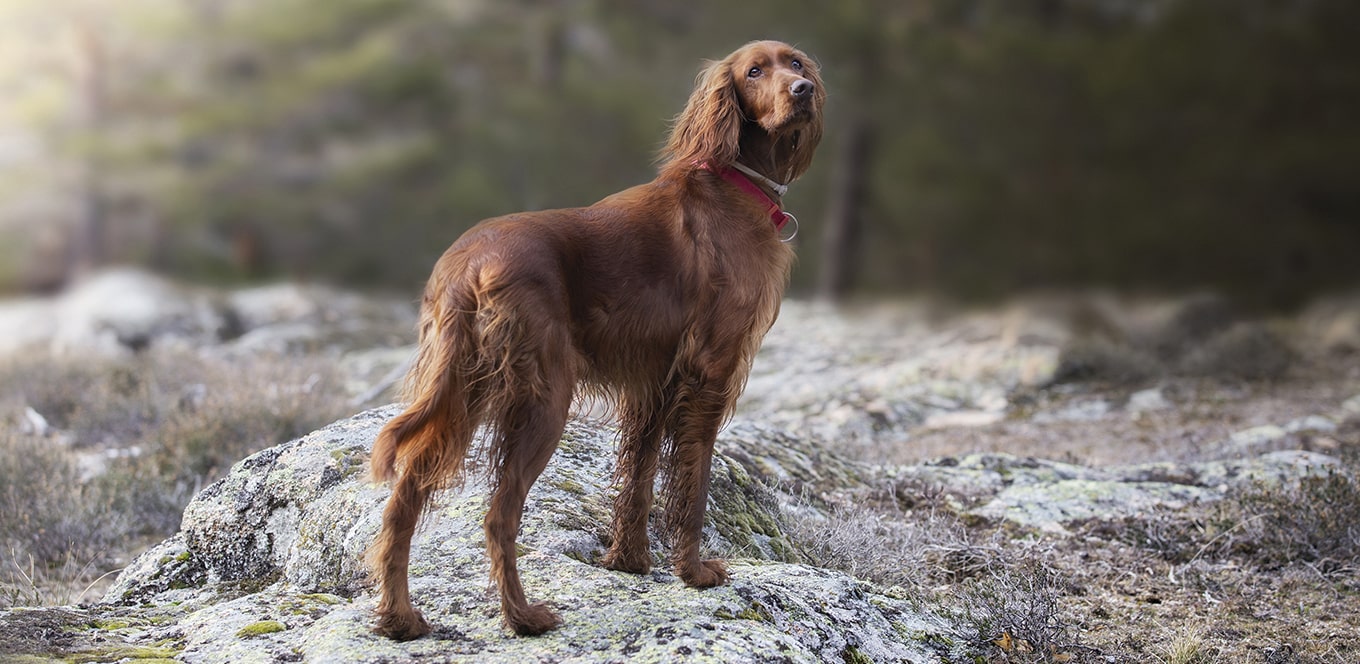
It’s easy to spot a healthy-looking dog: He has a gleam in his eye, a bounce in his step and a glossy, healthy coat. That glow is a reflection of your dog’s overall health and a good gauge of what’s going on inside and outside.
Regular grooming helps take care of the “outside” by removing loose hair, dirt and mats, and distributing skin oils. Grooming lets you check your pet closely, catching any skin problems early. Plus, your dog will love the attention!
As dogs age, their skin might become more sensitive. Select a mild dog shampoo for your older dog. Shampoos made from coconut or palm oils are the mildest. Unusual or “doggy” odors can signal disease, so if odors persist, contact your veterinarian. Do not use human shampoos because they are often too harsh for a dog’s skin.
When bathing your dog, be sure to rinse him thoroughly. Residue left on the skin can be irritating. You might want to follow the shampoo with a hair conditioner to control static electricity and add extra body or sheen.
During the summer, pay close attention to your dog’s skin and coat. Many dogs shed a winter coat and others face flea problems, so it’s a good time to evaluate your dog’s skin and coat condition to nip any problems in the bud.
Attention to your dog's coat and skin from the inside out will produce a healthy, lively dog that is a joy to look at — and a pleasure to live with — every day!

Giving your dog the right nutrients and a complete, balanced diet does not have to be a head-scratcher. All you need to know is what can a dog eat, how much to feed your dog or puppy, how to feed dogs, how many times to feed a dog, how to handle treats and supplements, etc. And this article tries to answer commonly asked questions on dog feeding.
When deciding which dog food is right for your pet, consider these three factors:
Puppies should be fed three times a day from weaning (3 to 6 weeks) to 4 months of age. After 4 months, they should be fed twice a day. Most dogs should continue to be fed twice a day throughout their life, although some pets do well with one feeding.
The answer to this question depends on your dog’s age, size, and activity level. Feeding guidelines, which list the daily-recommended portion, are included on all IAMS™ packages. Start feeding your dog with this amount and adjust according to its needs. Remember to divide the portion accordingly if you feed more than once a day.
The amount of food you need to feed your puppy depends on 3 main factors — breed, weight, and age. However, you can look at this puppy feeding table that we recommend for puppies:
Puppy | Adult target weight (kg) | Recommended daily feeding (g/day) | ||||
| <3 months | 3-6 months | 6-9 months | 9-12 months | 12-18 months | ||
Toy breed | 1-3 | 15-72 | 32-83 | 37-83 |
| |
| 3-5 | 33-106 | 72-121 | 83-121 | |||
Small breed | 5-8 | 48-151 | 106-172 | 111-172 | 111-170 | Transition to IAMS™ Proactive Health™ Adult Dog Food |
| 8-10 | 69-178 | 151-204 | 170-204 | 170-201 | ||
Medium breed | 10-20 | 82-299 | 178-343 | 201-343 | 201-339 | |
| 20-25 | 137-346 | 299-404 | 339-404 | 339-404 | ||
Large breed | 25-40 | 136-492 | 346-575 | 404-575 | 396-575 | 396-563 |
| 40-50 | 191-509 | 493-675 | 575-681 | 563-681 | 553-676 |
This diet contains 390 kilocalories of metabolizable energy (ME) per 100 gms. Remember to have clean, fresh water available for your dog always.
You should not change your puppy’s food to adult abruptly. Giving your pet time to acclimatise to the new taste of adult food is very important. Also, if you suddenly switch your pup’s food, it can cause digestive problems. Go through this schedule that will help you understand how much to feed your dog and transition your dog’s diet from puppy food to adult food:
If you are wondering how much to feed your puppy by weight and age, check out the weight and age-wise breakdown on when to transition your puppy’s diet to adult food:
Weight range | Age to begin transition |
Small breeds that weigh < 9.07 kgs | 9 and 12 months of age |
Medium breeds that weigh between 9.07 and 22.6 kgs | 12 to 14months of age |
Large breeds that weigh more than 22.6 kgs | 12 to 24 months of age |
While transitioning from adult dog food to senior dog food, it is important to factor in your dog’s weight. Look at this weight table to know when to transition your dog’s food from adult to senior:
Weight range | Age to begin transition |
More than 40.8 kgs | 5 years |
23.1 to 40.8 kgs | 6 years |
9.5 to 23.1 kgs | 7 years |
Up to 9.07 kgs | 7 years |
When changing your dog’s food diet, it’s important to slowly introduce new food. Start by offering your dog’s daily portion in a ratio of 25% new food to 75% current food. During the next three days, gradually increase the amount of new food and decrease the amount of the old food.
If your dog has gained unhealthy weight, make sure to cut down on fats along with increasing regular exercise. We recommend you browse through IAMS™ products and choose dog foods that are low on fat. How much food to feed your dog if they are overweight, is another major concern. You can consult your vet to understand the right amount of food your furry friend needs for each meal.
It’s important to understand that your dog’s nutritional needs change during pregnancy and ensure you feed her nutrition-rich food. For pregnant dogs, we recommend IAMS™ Puppy food as it’s full of proteins that can help your pregnant dog during the gestation period and improve the quality of milk to nourish her puppies post-delivery.
Wet food is an excellent treat that can be fed alone or mixed with dry food. Although IAMS wet dog foods are nutritionally complete and balanced, it is not necessary to offer wet food at every feeding. Our dry foods are formulated with high-quality protein sources such as chicken and contain all the essential nutrients pets need. The crunchy texture of dry food also promotes healthy teeth and gums, and aids in overall good oral hygiene. In addition, some of our dry dog foods contain a dental enhancement to help block tartar buildup on teeth during and after meals.
No. Unlike humans, dogs have fewer taste receptors. Hence, they won’t feel the urge to eat something different every day. In fact, if you find something that suits your dog’s overall health and preferences, stick to that food.
Soaking dry food will ease up the initial job of the digestive enzymes. While water will not change its nutritional value, the food should be eaten relatively soon. Moreover, ensure that the leftover portion is discarded to avoid spoilage. We recommend providing your dog with IAMS™ dry food because it is beneficial to your dog’s dental health as well.
No. Cats and dogs have different nutritional requirements. Moreover, cat foods are made with higher fat levels, which can be harmful to a dog. While it is okay for dogs and cats to sniff and lick some food from each other’s bowl, you shouldn’t let dogs eat cat food.
We recommend feeding your dog approximately two to four small biscuits per cup of food. Keep in mind that when you add biscuits to your dog’s daily diet, this increases its daily calorie intake, so you should reduce the amount of food you feed. Check the calorie content of the biscuit since biscuits vary in size and formulation.
Since IAMS™ dog foods are nutritionally complete and balanced, adding more vitamins, minerals or oils can disrupt the balance our dog food provides. The reason why you provide your dog with a high-quality product is that it has been developed to offer nourishment in proper ratios and ensure optimal nutrition. Hence, nothing needs to be added.
Protein is one of the essential elements that should be a part of your dog’s diet. Including protein in your dog’s diet will strengthen its muscles, ligaments, and cartilages. A protein-rich food also brings about a healthy shine to your dog’s coat!
It is important to maintain a feeding schedule for dogs so that they are conditioned to expect food at that time and avoid irregular snacking in between.
You should never feed your dog home-baked goods, candy, gum, chocolate, limes, onion, and grapes. They can harm your dog’s digestive tract and cause infections as well.
IAMS™ dog food is full of key nutrients that your dog needs for its healthy growth. The basic ingredients in our food include chicken, fish oil, beet pulp, wholesome grains, and natural prebiotic.
Follow our blogs to know more about pet nutrition and dog food diet. Feel free to contact us here in case of any queries.