Enter a keyword below to search for articles and products.


Dog-food products described as light, lite, or low calorie must meet specific calorie levels set by the Association of American Feed Control Officials (AAFCO), while dog foods named “less” or “reduced calorie” must show a percent reduction in calories as compared to a product in the same moisture-content category. The following table shows the guidelines as set by AAFCO for both dog and cat foods for determining whether a product can use the term “light.”
| Food Texture | Moisture Content | Dog Foods Maximum kcal ME/kg | Cat Foods Maximum kcalME/kg |
|---|---|---|---|
| Dry | less than 20% moisture | 3,100 | 3,250 |
| Semi-Moist | between 20 and 64% moisture | 2,500 | 2,650 |
| Canned | 65% or more moisture | 900 | 950 |
Like light versus reduced-calorie foods, lean or low-fat dog-food products must meet specific fat levels set by AAFCO, and less-fat or reduced-fat dog-food products need to show a percent reduction in fat as compared to a product in the same moisture category. AAFCO guidelines for dog and cat foods with “lean,” “low fat,” or similar words are shown in the following table.
| Food Texture | Moisture Content | Dog Foods Maximum % Crude Fat | Cat Foods Maximum % Crude Fat |
|---|---|---|---|
| Dry | less than 20% moisture | 9 | 10 |
| Semi-Moist | between 20 and 64% moisture | 7 | 8 |
| Canned | 65% or more moisture | 4 | 5 |
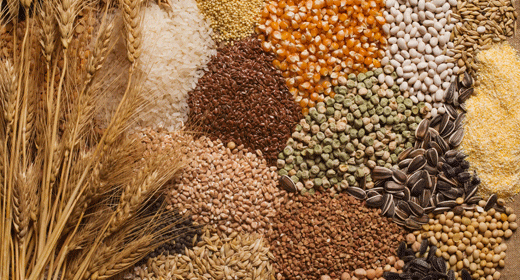
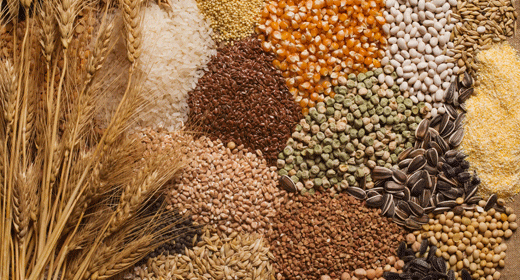
IAMS research has shown that some dog-food products are best formulated using a combination of carbohydrate sources. All IAMS dog foods are formulated precisely to meet the nutritional needs of your dog in his life stage. Such a combination offers optimal digestibility and helps maintain energy levels.
Our dog foods contain a variety of carbohydrate ingredients:
Barley: IAMS uses ground whole-grain barley that's cooked at high temperatures and finely ground in our dry dog-food formulas as part of our patented carbohydrate blend.
Corn: IAMS uses high-quality corn kernels that have been finely ground to break up the outside covering of each kernel, and then cooked at high temperatures to increase digestibility.
Grain sorghum: Also called milo, it is cracked, finely ground, and cooked before it is added to our dry dog foods. It is another carbohydrate source in our patented carbohydrate blend.
Rice flour: Our foods contain small kernels of white rice that have been separated from the larger kernels of milled rice, ground, and cooked at high temperatures to optimize digestibility.
Wheat: This is another high-quality carbohydrate source. In our biscuits, the wheat is an excellent, palatable carbohydrate source and adds a firm texture to the biscuit during the baking process.
Highly digestible diets are an important factor in the well-being of your dog. They deliver more essential nutrients more efficiently, so there is less waste.
Innovative and patented research by IAMS scientists has found that when the complex-carbohydrate sources grain sorghum and barley are used in a dog's diet, their breakdown is enhanced at another level.
These carbohydrate sources are all highly digestible, meaning your dog's body will still metabolize a high percentage of each for energy. What's unique about these grains is that they break down slowly and evenly, providing a stable source of energy.
The slow, even breakdown of grain sorghum, corn, and barley results in moderate, stable blood glucose levels after a meal. By minimizing swings in blood glucose, diets containing such a blend supply sustained energy. IAMS holds a patent on using grain sorghum and barley in a blend for dogs.