Enter a keyword below to search for articles and products.


Watch as Expert Dog Trainer Kathy Santo talks about all the research that goes into finding the perfect puppy. From breed and temperament to barking, you’ll learn all the details that are often overlooked by people when they’re shopping around for a new best friend.
Hi, I'm Kathy Santo with IAMS. Are you thinking of getting a dog? Bringing a new dog into your home is a big responsibility. You'll need to take the time to train and socialize your dog, as well as be prepared for the financial commitment that goes with pet ownership. Your dig will need food, supplies, veterinary care, and more. Remember, he'll depend on you for his health and well being. So be sure you're ready for a dog before you start the process. No surprise puppies. Make sure everyone in your household is on board with getting a puppy. Too often, puppies are given up if the family isn't ready for the commitment that puppies require. Once you've thought through the commitments and responsibilities associated with dog ownership, the next step is to figure out what type of dog is right for you and your family. Today we're going to discuss a variety of things you should think about before choosing your dog. What type of family do you have? Do you have kids or other pets? What size of dog works best for your family? Do you know how much cleaning and grooming time you can commit to? How much time do you have for training your new pup? What energy level is a good fit for your home? Is barking something to consider? What kind of temperament is right for your family? We all know how cute puppies and dogs are, and it can be hard to resist when you go to pick them out. Remember, they'll have an easier transition into your home if you think about the best type of dog for you. Consider the following aspects to help you choose the best dog for you and your family. Large dogs-- generally they aren't as suitable for apartment dwellers. They need a bit more space to move around, mostly for their long tails that need wagging space. They tend to be more expensive-- more dog food supplies and medical treatment. Small dogs-- they are more delicate and vulnerable. Being stepped on or mishandled can cause serious injury. Also, little dogs can be more sensitive to colder temperatures, so be ready to keep them warm. They're generally less expensive to maintain. How much cleaning up can you commit to? Long coated and double coated dogs shed, shed, and shed some more, leaving tufts of hair to float about the house and land everywhere. How much time are you willing to spend brushing or grooming? Make sure to consider the costs. A monthly grooming service can really add up over the years. If you lack time and patience to deal with a dog that's difficult to train, then an older dog from a rescue may fit your bill as well as a pup of a breed that is traditionally easier to train. Intelligence is not necessarily an indicator of train ability. Smart dogs often have their own agenda and require consistency on the part of their owners. Dogs with a willingness to work and a desire to please you often turn out to be the best companions. I recommend hiring a dog trainer to perform a few tests to help determine if the dog is a good fit for you. As a rule, terriers, hounds, and northern dogs are tough to train because of their intelligent and independent natures, while sporting and herding dogs are easier to train. The sharpest working obedience breeds are golden retrievers, Labrador retrievers, border collies, German shepherds, and Shetland sheepdogs, breeds that develop closely with humans. Some dogs enjoy lounging at your feet to sleep the day away, while others are very energetic and ready to run a marathon right alongside you. Cute as they are, basset hounds, dachshunds, and corgis are not jogging companions. And Airedales, German shepherds, and border collies are not typical couch potatoes. All dogs need some exercise to stay healthy. Most adult dogs will not exercise themselves, so time for walks and other activities is important. Some dogs bark a lot, and the amount can vary by breed. Terriers and scent hounds use their voices to broadcast their progress in chasing prey. Shelties and collies bark to tell the sheep to get back to the barn. Canaan dogs bark to alert their families of potential intruders. Many dogs will bark if they're bored, so owners should also be sure to assess their own time and ability for training, walking, and play times, and should properly confine the dog when they can't otherwise keep it from disturbing the neighbors. There are some special collars available to deter barking dogs, and training methods that can help in some cases. But if potential owners take the noise factor into consideration, problems are more likely to be minimized. Breed and temperament can be described, but there is room within that description for individuality. For example, akitas are declared to be tough, loyal, aloof, dominant, aggressive to other animals, and often challenging. However, many akitas are sweet and cuddly, loves small critters, will climb in laps if allowed, and are anything but aloof and dominant. Terriers are scrappy, yappy, tough, and independent. But Airedale terriers bond very closely to their humans, and are somewhat protective. Hounds follow their eyes or noses, and are often oblivious to human presence. Dachshunds bond closely with their families, and greyhounds and whippets are sweet, gentle pets. Because temperament isn't always easy to judge when meeting a new dog, I strongly recommend hiring or asking a professional dog trainer to come with you to evaluate temperament. They'll be able to assess the dog's personality, compare it with your wish list, and determine what dog is the best fit for you. If you can arrange this, ask the people who've interacted with the dog the most about his temperament. Once you've thought about the commitments and have a good idea of what type of dog is the best fit for your family's lifestyle, check out your local animal shelter or animal rescue to see if a new addition is waiting there for you. I'm Kathy Santo with IAMS, and I hope you found this helpful as you welcome your new addition into your family.


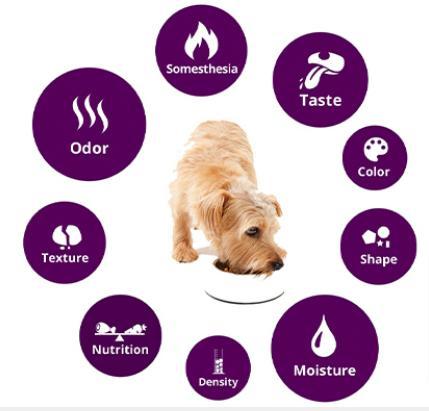
Even if a pet food is formulated to provide all of the essential nutrients required by a dog, it is of little value if the animal will not eat it. Quality pet foods are carefully formulated not only to be highly nutritious but also to be highly palatable.
Highly palatable dog food recipes contain various ingredients and raw materials, including palatants. Palatants help improve the smell, flavor, and texture of your dog’s food. Examples of palatants include fat, salt, proteins, yeasts, and other flavors that are added to make food taste better. Dry foods usually need extra palatants to make them more pleasant and appealing.
Palatability is a term used to describe how well a dog likes the taste, smell, and texture of a food. A premium dog-food manufacturer spends a considerable amount of time conducting controlled feeding studies to determine the right combination of ingredients and processing techniques to produce a nutritious, palatable food.
There are two ways to test and measure the palatability of a dog food:
First Bite: The first palatability test is called the “first bite” preference. This measures the dog's first impression of a food's aroma and appearance.
Total Volume: Because the novelty of a new diet can cause highs and lows in first-bite tests, a second test is conducted called “total volume” measurement. Total volume determines the staying power or ability of a diet to maintain the animal's interest over time. This is the dog’s overall choice of a food based on taste, texture, and nutrition for the entire test period.
Dogs can become picky eaters for a variety of reasons. Some of the reasons why dogs can become picky eaters include:
In comparison to humans, dogs have significantly more smell sensors than taste receptors. This implies that foods with stronger aromas tend to appeal to dogs more. While scent is crucial, less odorous meals like dry kibble can also improve your dog’s food palatability. A dog’s taste buds are hard-wired to sense the presence of fats as well as salt (but not necessarily salt flavor). Fat is frequently added to kibble to improve flavor and palatability without making the food stinky.
While taste and scent are some of the primary ways a dog decides if something is pleasant, palatability can also be influenced by a wide range of factors, such as the dog’s unique preferences and even the owner’s preference for meals and feeding times.
To make a dog eat food, you need to:
Everybody in the household needs to accept and follow the pet’s feeding plan from the beginning. You should be consistent and rigorously adhere to your dog's diet. If you decide to give your dog leftovers, choose to combine nutritious foods with kibble.
Offering your dog table scraps often promotes begging and throws off your pet’s diet. It can also lead to several health issues, including diarrhea and pancreatitis. Although human food is far more palatable, it is less healthy than canned or dry dog food.
Puppies need to be fed two to three times a day, or as your vet may prescribe. As they get older, you can gradually increase the serving size while offering meals just once or twice a week. Additionally, you must add some variety and deliver equal servings. Allowing a schedule also helps keep your dogs weight in check.
In order to obtain and interpret accurate results, palatability studies must be performed by experienced animal technicians and the data analyzed by research nutritionists. Feeding studies are conducted by offering an animal two bowls of food at the same time. Each bowl contains a different diet that has been carefully weighed and recorded.
The technician observes which food the dog chooses to eat first, and then records that as the first-bite preference. After a specific time period, bowls are removed, and any remaining food is weighed and recorded. Diets also are switched from left to right each day of the study to ensure that dogs are not eating one diet simply out of habit.
The total-volume measurement is determined by calculating the difference between the beginning and ending weights of each food. This procedure is repeated using the same two diets with the same group of dogs for five days. At the end of the five-day study, all observations and data are compiled and analyzed to determine the overall palatability of each diet.
Here is a quick look at some flavors that can appeal to your pet.
Meaty Flavor
Animal Fats
Gravy or Stews
Dogs are attracted by not only the taste of a food, but also to its sight, aroma, and texture. Dogs are particularly interested in the smell of food.
If you are wondering how to increase palatability of dog food, here are a few tips that might help.
Select The Right Protein
Whether your pooch prefers dry or wet dog food, remember that the choice of protein is extremely essential. The most palatable dog foods are ones that are available in different meaty flavors such as lamb, beef, and chicken.
Liquid digest is simply protein that is enzymatically broken down into amino acids, which are the building blocks of protein. The enzymatic process reduces large protein pieces to smaller protein pieces and free amino acids. By adding small amounts of acid, the enzymatic or digestive reaction is stopped, and a stable liquid ingredient is produced. After a dry-food formula is cooked, formed into kibbles, and dried, the liquid digest is sprayed evenly on the outside of the dry kibbles. This is called “enrobing.” Not only does the liquid digest make the food highly palatable, but it also adds to the overall digestibility of the food.
Yes. We use liquid digest made from chicken to enhance the palatability of dry foods and to contribute to the nutritional value of the diet. Some pet foods include flavor enhancers, such as onion powder, which simply mask the aroma and taste of the ingredients and provide no nutritional benefits to the animal.
If you're looking for the perfect dog for you, try our Dog Breed Selector today and enjoy a lifetime of tail-wagging joy.