Enter a keyword below to search for articles and products.


Watch as Expert Dog Trainer Kathy Santo talks about all the research that goes into finding the perfect puppy. From breed and temperament to barking, you’ll learn all the details that are often overlooked by people when they’re shopping around for a new best friend.
Hi, I'm Kathy Santo with IAMS. Are you thinking of getting a dog? Bringing a new dog into your home is a big responsibility. You'll need to take the time to train and socialize your dog, as well as be prepared for the financial commitment that goes with pet ownership. Your dig will need food, supplies, veterinary care, and more. Remember, he'll depend on you for his health and well being. So be sure you're ready for a dog before you start the process. No surprise puppies. Make sure everyone in your household is on board with getting a puppy. Too often, puppies are given up if the family isn't ready for the commitment that puppies require. Once you've thought through the commitments and responsibilities associated with dog ownership, the next step is to figure out what type of dog is right for you and your family. Today we're going to discuss a variety of things you should think about before choosing your dog. What type of family do you have? Do you have kids or other pets? What size of dog works best for your family? Do you know how much cleaning and grooming time you can commit to? How much time do you have for training your new pup? What energy level is a good fit for your home? Is barking something to consider? What kind of temperament is right for your family? We all know how cute puppies and dogs are, and it can be hard to resist when you go to pick them out. Remember, they'll have an easier transition into your home if you think about the best type of dog for you. Consider the following aspects to help you choose the best dog for you and your family. Large dogs-- generally they aren't as suitable for apartment dwellers. They need a bit more space to move around, mostly for their long tails that need wagging space. They tend to be more expensive-- more dog food supplies and medical treatment. Small dogs-- they are more delicate and vulnerable. Being stepped on or mishandled can cause serious injury. Also, little dogs can be more sensitive to colder temperatures, so be ready to keep them warm. They're generally less expensive to maintain. How much cleaning up can you commit to? Long coated and double coated dogs shed, shed, and shed some more, leaving tufts of hair to float about the house and land everywhere. How much time are you willing to spend brushing or grooming? Make sure to consider the costs. A monthly grooming service can really add up over the years. If you lack time and patience to deal with a dog that's difficult to train, then an older dog from a rescue may fit your bill as well as a pup of a breed that is traditionally easier to train. Intelligence is not necessarily an indicator of train ability. Smart dogs often have their own agenda and require consistency on the part of their owners. Dogs with a willingness to work and a desire to please you often turn out to be the best companions. I recommend hiring a dog trainer to perform a few tests to help determine if the dog is a good fit for you. As a rule, terriers, hounds, and northern dogs are tough to train because of their intelligent and independent natures, while sporting and herding dogs are easier to train. The sharpest working obedience breeds are golden retrievers, Labrador retrievers, border collies, German shepherds, and Shetland sheepdogs, breeds that develop closely with humans. Some dogs enjoy lounging at your feet to sleep the day away, while others are very energetic and ready to run a marathon right alongside you. Cute as they are, basset hounds, dachshunds, and corgis are not jogging companions. And Airedales, German shepherds, and border collies are not typical couch potatoes. All dogs need some exercise to stay healthy. Most adult dogs will not exercise themselves, so time for walks and other activities is important. Some dogs bark a lot, and the amount can vary by breed. Terriers and scent hounds use their voices to broadcast their progress in chasing prey. Shelties and collies bark to tell the sheep to get back to the barn. Canaan dogs bark to alert their families of potential intruders. Many dogs will bark if they're bored, so owners should also be sure to assess their own time and ability for training, walking, and play times, and should properly confine the dog when they can't otherwise keep it from disturbing the neighbors. There are some special collars available to deter barking dogs, and training methods that can help in some cases. But if potential owners take the noise factor into consideration, problems are more likely to be minimized. Breed and temperament can be described, but there is room within that description for individuality. For example, akitas are declared to be tough, loyal, aloof, dominant, aggressive to other animals, and often challenging. However, many akitas are sweet and cuddly, loves small critters, will climb in laps if allowed, and are anything but aloof and dominant. Terriers are scrappy, yappy, tough, and independent. But Airedale terriers bond very closely to their humans, and are somewhat protective. Hounds follow their eyes or noses, and are often oblivious to human presence. Dachshunds bond closely with their families, and greyhounds and whippets are sweet, gentle pets. Because temperament isn't always easy to judge when meeting a new dog, I strongly recommend hiring or asking a professional dog trainer to come with you to evaluate temperament. They'll be able to assess the dog's personality, compare it with your wish list, and determine what dog is the best fit for you. If you can arrange this, ask the people who've interacted with the dog the most about his temperament. Once you've thought about the commitments and have a good idea of what type of dog is the best fit for your family's lifestyle, check out your local animal shelter or animal rescue to see if a new addition is waiting there for you. I'm Kathy Santo with IAMS, and I hope you found this helpful as you welcome your new addition into your family.


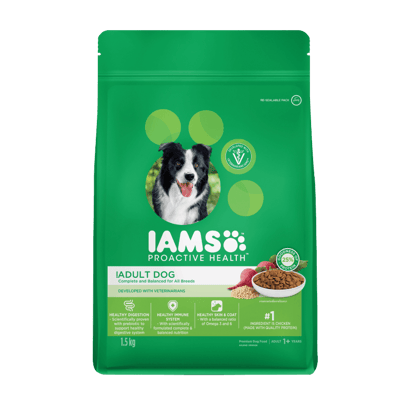
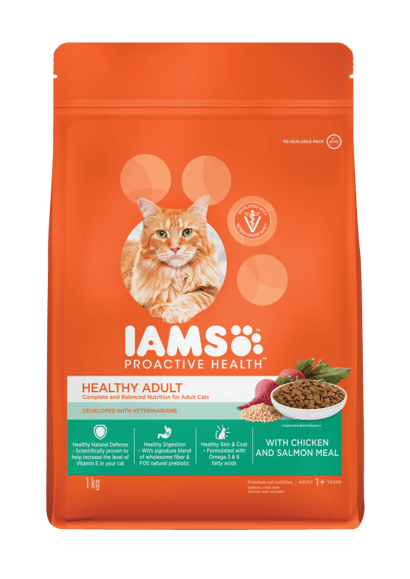
Providing pets with vitamins, minerals, and other nutritional components is important to pet health and well-being, and the best way to do this is to feed a high-quality, complete, and balanced diet. Supplementing dog food often upsets the balance and might cause health problems.
People supplement their dog's diet for different reasons:
It is important to know that a quality dog food is carefully formulated to meet the caloric needs of the animal. The food provides essential amino acids, vitamin-rich fish oils, and minerals specific to the nutritional requirements of the dog.
Quality foods are complete and balanced for a specific life stage or lifestyle. Adding table scraps or other supplements can disrupt the delicate nutrient balance.
The interaction between minerals is very complex. Fortunately, this area of nutrition has been the focus of extensive research for many years. Research has shown that not only are the individual levels of minerals in a diet important but the proper balance is also. An excess of one mineral might affect the absorption of a second, and lead to a deficiency in that second mineral.
One common way of supplementing is to feed extra meat. However, because meat contains 20 to 40 times more phosphorus than calcium, adding meat to a balanced diet will upset the calcium to phosphorus (or Ca:P) ratio, which is important for proper bone development and maintenance.
This might prompt your pet's body to absorb calcium from the bones in order to reach the right balance. This is often the case in older animals that experience tooth loss due to the reabsorption of bone from the lower jaw. Ca:P ratio should range between 1.1 to 1.4 parts of calcium for each part of phosphorus.
Excess amounts of calcium have been associated with several bone diseases affecting growing puppies. Owners of large-breed puppies, in particular, believe that their puppies require extra calcium for proper development of large bones. Adding yogurt, cottage cheese, or calcium tablets to the puppy's diet will only upset the body's delicate mineral balance.
Remember: Large-breed puppies consume more food and get the calcium their bodies need by eating the recommended portions. The best way to support a normal growth rate is to feed growing dogs a balanced diet using a portion-controlled regimen.
The Association of American Feed Control Officials (AAFCO) regulates the pet food industry and has established certain nutritional requirements for dogs. These requirements are published annually in the AAFCO Manual. Only pet foods that have met the strict criteria established by AAFCO can carry the 'complete and balanced' statement on the label.