Enter a keyword below to search for articles and products.


Watch as Expert Dog Trainer Kathy Santo talks about all the research that goes into finding the perfect puppy. From breed and temperament to barking, you’ll learn all the details that are often overlooked by people when they’re shopping around for a new best friend.
Hi, I'm Kathy Santo with IAMS. Are you thinking of getting a dog? Bringing a new dog into your home is a big responsibility. You'll need to take the time to train and socialize your dog, as well as be prepared for the financial commitment that goes with pet ownership. Your dig will need food, supplies, veterinary care, and more. Remember, he'll depend on you for his health and well being. So be sure you're ready for a dog before you start the process. No surprise puppies. Make sure everyone in your household is on board with getting a puppy. Too often, puppies are given up if the family isn't ready for the commitment that puppies require. Once you've thought through the commitments and responsibilities associated with dog ownership, the next step is to figure out what type of dog is right for you and your family. Today we're going to discuss a variety of things you should think about before choosing your dog. What type of family do you have? Do you have kids or other pets? What size of dog works best for your family? Do you know how much cleaning and grooming time you can commit to? How much time do you have for training your new pup? What energy level is a good fit for your home? Is barking something to consider? What kind of temperament is right for your family? We all know how cute puppies and dogs are, and it can be hard to resist when you go to pick them out. Remember, they'll have an easier transition into your home if you think about the best type of dog for you. Consider the following aspects to help you choose the best dog for you and your family. Large dogs-- generally they aren't as suitable for apartment dwellers. They need a bit more space to move around, mostly for their long tails that need wagging space. They tend to be more expensive-- more dog food supplies and medical treatment. Small dogs-- they are more delicate and vulnerable. Being stepped on or mishandled can cause serious injury. Also, little dogs can be more sensitive to colder temperatures, so be ready to keep them warm. They're generally less expensive to maintain. How much cleaning up can you commit to? Long coated and double coated dogs shed, shed, and shed some more, leaving tufts of hair to float about the house and land everywhere. How much time are you willing to spend brushing or grooming? Make sure to consider the costs. A monthly grooming service can really add up over the years. If you lack time and patience to deal with a dog that's difficult to train, then an older dog from a rescue may fit your bill as well as a pup of a breed that is traditionally easier to train. Intelligence is not necessarily an indicator of train ability. Smart dogs often have their own agenda and require consistency on the part of their owners. Dogs with a willingness to work and a desire to please you often turn out to be the best companions. I recommend hiring a dog trainer to perform a few tests to help determine if the dog is a good fit for you. As a rule, terriers, hounds, and northern dogs are tough to train because of their intelligent and independent natures, while sporting and herding dogs are easier to train. The sharpest working obedience breeds are golden retrievers, Labrador retrievers, border collies, German shepherds, and Shetland sheepdogs, breeds that develop closely with humans. Some dogs enjoy lounging at your feet to sleep the day away, while others are very energetic and ready to run a marathon right alongside you. Cute as they are, basset hounds, dachshunds, and corgis are not jogging companions. And Airedales, German shepherds, and border collies are not typical couch potatoes. All dogs need some exercise to stay healthy. Most adult dogs will not exercise themselves, so time for walks and other activities is important. Some dogs bark a lot, and the amount can vary by breed. Terriers and scent hounds use their voices to broadcast their progress in chasing prey. Shelties and collies bark to tell the sheep to get back to the barn. Canaan dogs bark to alert their families of potential intruders. Many dogs will bark if they're bored, so owners should also be sure to assess their own time and ability for training, walking, and play times, and should properly confine the dog when they can't otherwise keep it from disturbing the neighbors. There are some special collars available to deter barking dogs, and training methods that can help in some cases. But if potential owners take the noise factor into consideration, problems are more likely to be minimized. Breed and temperament can be described, but there is room within that description for individuality. For example, akitas are declared to be tough, loyal, aloof, dominant, aggressive to other animals, and often challenging. However, many akitas are sweet and cuddly, loves small critters, will climb in laps if allowed, and are anything but aloof and dominant. Terriers are scrappy, yappy, tough, and independent. But Airedale terriers bond very closely to their humans, and are somewhat protective. Hounds follow their eyes or noses, and are often oblivious to human presence. Dachshunds bond closely with their families, and greyhounds and whippets are sweet, gentle pets. Because temperament isn't always easy to judge when meeting a new dog, I strongly recommend hiring or asking a professional dog trainer to come with you to evaluate temperament. They'll be able to assess the dog's personality, compare it with your wish list, and determine what dog is the best fit for you. If you can arrange this, ask the people who've interacted with the dog the most about his temperament. Once you've thought about the commitments and have a good idea of what type of dog is the best fit for your family's lifestyle, check out your local animal shelter or animal rescue to see if a new addition is waiting there for you. I'm Kathy Santo with IAMS, and I hope you found this helpful as you welcome your new addition into your family.
Just like in humans, obesity can lead to serious health issues in dogs as well. The primary causes of obesity in dogs are lack of physical activities, imbalanced diet, and overfeeding. If you notice a sudden increase in your dog’s weight despite having a normal diet and sufficient exercise, it could also be a sign of some hormonal disorder. Obese dogs are at risk of developing diabetes, heart diseases, bone deterioration, arthritis, and other severe disorders. Thus, it is crucial to monitor your dog’s weight.
Wondering what is the ideal weight for dogs? A dog’s healthy weight can differ from breed to breed; hence, you can consult your vet to understand the right weight range for your pet. However, the below dog weight chart will help you get an idea on whether your furry friend is underweight, healthy, or obese.
Underweight: You can clearly see an underweight dog’s ribs, spine, and hip bone. There is zero body fat and that can be seen on its body. In dogs who are genetically thin, the loss of muscle mass may be evident.
Ideal: You can easily feel the ribs, spine and hips of a dog that falls in an ideal weight category. Its waist should also be visible from above and the side. The last couple of ribs may be visible on a short-coated dog while playing or exercising, which is normal.
Overweight: A dog is considered overweight when it weighs 10-20% more than its ideal body weight. It is difficult to feel the ribs of these dogs. The fat accumulation is also visible at the base of its tail and on the belly. Its back also starts to appear broader. It is advisable to start working on shedding the extra kilos your dog has gained at this stage.
Obese: A dog is considered overweight when it weighs 20% more than its ideal weight. You cannot feel its ribs at all due to the heavy fat accumulation. Fat deposits are also visible around the dog’s neck and its belly also starts to droop.
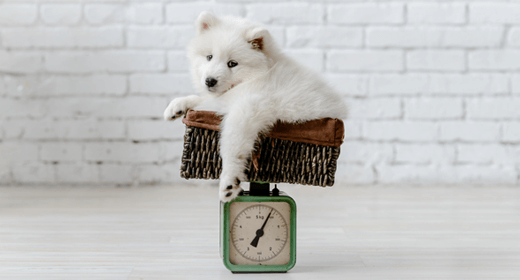
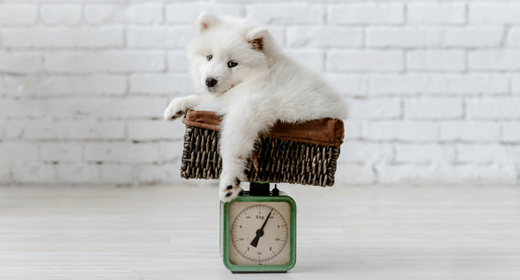
You can measure your dog’s weight at home if your dog is a small breed. Here are the steps to follow while measuring the weight of your dog at home:
These steps should not be followed by those who have medium or large breed dogs. The size of your dog could make it difficult for you to hold it properly, and if it starts fidgeting, the handler or the dog could get injured. Hence, owners of medium and large breed dogs should go to the vet to weigh their pet.
You can easily manage your dog’s weight and maintain the ideal weight of your dog if you follow a regime and take the necessary steps. Here’s are some things you should keep in mind during your dog’s weight management:
Dogs remain healthy if their food quantity is controlled and they are fed on time. But you should avoid feeding your dog home-cooked food. Wondering why? It is because home-cooked meals might not have the right nutrients in the right quantities and that can later affect your furry friend’s overall health. Hence, to keep such risks at bay, it is best that you avoid feeding home-cooked food. In case you plan on giving your dog home-cooked meals, it is imperative that you follow the recipe to the T.
Your dog is your friend so, it's hard not to share your delicious bacon or a mouthful of steak with it. When your dog sits next to you and makes those adorable puppy-dog eyes as you eat, it becomes even more difficult to not share some of your food with it. But you must resist. Giving “human food” greatly increases your dog’s fat intake. It also conditions the dog to believe that it will be fed every time you eat.
Exercise is a great way to keep your dog in shape. If you have a busy schedule, then you could break it down into short sessions to play fun games like tug-of-war or go for a quick jog with your dog. You could also play with a frisbee or start working on its agility. Dogs that get enough exercise are less likely to be stressed and this way, you would also get a break from your work.
Of course, you want to reward a dog when it’s been a good boy or a good girl. But keep in mind that those dog treats can add calories and fat. And more importantly, think about how many types of treats and snacks you are feeding your dog and how often.
Of course, you want to reward a dog when it’s been a good boy or a good girl. But keep in mind that those snacks can add calories and fat. And more importantly, think about how many types of treats and snacks you are feeding your dog and how often.
There are lots of dog foods available in the market and each pack contains different quantities of proteins, vitamins, minerals, and other nutrients. You must go for foods that provide complete nutrition to your furry friend, and not just calories. Hence, it is necessary to opt for a pet food brand that specialises in dog nutrition.
At IAMS™, we have been focusing on bringing out the best in your dog through healthy food. Explore our range of dog food and choose a product that best suits your dog’s size and age. However, consult your vet regarding the serving size and other details. A vet will also provide you with the tips and tricks on keeping your dog’s weight under control.
If you're looking for the perfect dog for you, try our Dog Breed Selector today and enjoy a lifetime of tail-wagging joy.