Enter a keyword below to search for articles and products.
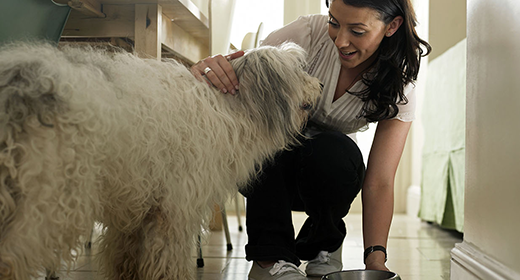
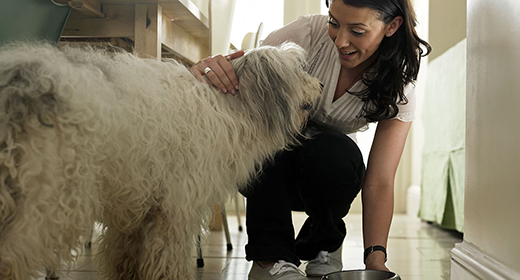
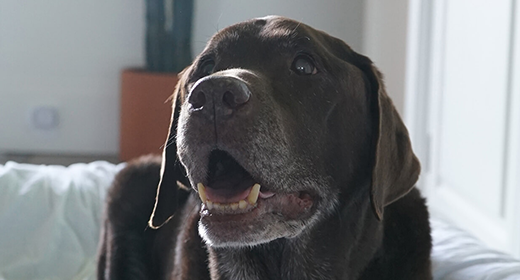
Dogs hit maturity around 7 years of age (5 years for larger dogs). It's not uncommon for them to live as long as 15 years. As your pet enters his golden years, his activity level might slow down and common conditions such as arthritis, diabetes, and kidney disease may arise. “It is so more important to monitor the eating habits of older pets,” stresses Tom Carpenter, DVM, president of the American Animal Hospital Association. “Generally, older pets do not need as much protein, sodium, and phosphorus. But your veterinarian needs to address this for your individual pet,” he says, adding that semiannual vet visits are recommended for an older animal.
Some mature dogs are prone to obesity. To test whether your dog is at a healthy weight, move your hands along his sides. If you can feel his ribs (but don't see them), he's doing okay. But if you feel a fat covering, or you visibly notice a rounded abdomen, he might be overweight. Exercise is still important for a senior dog, and if he's gained weight, you want to look for a low-fat weight-control food that contains vitamin-rich fish oils (IAMS™ ProActive Health™ Mature Adult is one good choice).
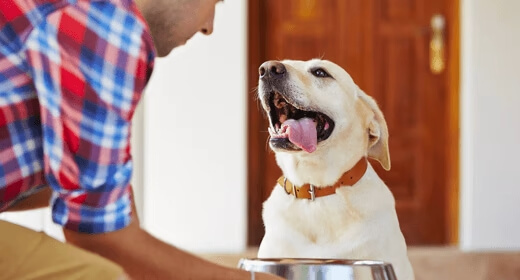
Other mature pets can become finicky eaters and lose weight as they age. 'Very old pets may actually need a more calorie-dense diet,' Carpenter says. Older dogs can lose their sense of smell and have a harder time chewing their food. To make mature dog food easier to eat, you can top their dry food with room-temperature wet food.
If your dog is gaining or losing a lot of weight, slightly decrease or increase his daily feedings. A sudden change in weight or appetite might be a sign of disease, so you should check with your vet. Water is also essential. 'Older pets are at a higher risk of dehydration,' Carpenter says. Provide a clean bowl with fresh water at all times.
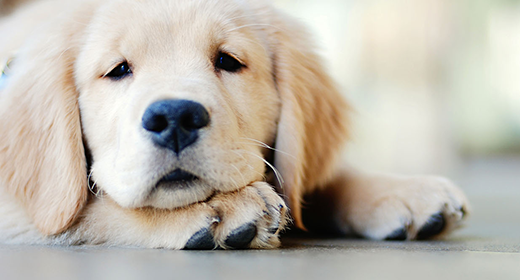
Puppies bring abundant joy to our lives from the moment we bring them home and caring for them comes as second nature to us. ‘How to take care of puppies’ is one of the most frequently asked questions by new puppy owners. But taking care of puppies is quite easy with the right method. IAMS is here to help you every step of the way in raising your puppy. From having a varied dog food range to providing tips on dog nutrition, we have got you covered.
Puppies need healthy food and a safe environment as they’re vulnerable to various types of illnesses and diseases. Also, puppies have a natural tendency to chew on objects, so it’s important to ensure that they don’t end up swallowing dangerous objects. Make sure you offer toys to your puppy to satisfy its need to chew.
If you feed your puppy healthy food from the start, it will remain healthy even in its old age. Proper nutrition from the start ensures that your puppy does not fall sick or even suffer from fur loss. Making sure that your puppy remains active is very important. A sedentary lifestyle, even for dogs, is extremely harmful to their health in the long run. All these things are an essential part of taking care of your puppy that adds to its healthy and long life.
Here is a table that will help you understand your puppy’s growth and developmental stage better:
Growth stage | 0-7 weeks | 7-8 weeks | 8-10 weeks | 8-16 weeks | 4-6 months | 6-12 months | 12-18 months |
Character traits | Puppies learn social behaviour like when to bite, submission, paying attention and general interaction with other dogs. | This is the best period for puppies to bond with humans. | This is a very vulnerable stage for the puppy, and it is best if it has positive experiences during this stage. It is also called the ‘fear period’. | You can start training your puppy during this stage. And avoid incorporating punishment for this purpose. | Your puppy may appear more confident and independent during this stage. | This is the stage when your pup is high on energy. You must ensure it does not experience boredom during this stage. | By the time your pup reaches this stage, it should have reached emotional maturity as well. |
You may begin training them at this stage with basic simple manners. | It is important to make your puppy feel good if it’s sad. | Ensure you get your puppy spayed or neutered by the 6th month. | Provide many opportunities to your dog to play with different kinds of toys. | During this phase, your dog tends to assert its dominance and hope to improve its status in your house. |
Owning a puppy feels special, doesn’t it? You have to keep a few things in mind when you bring your puppy home. Here are some tips that may help you raise your dog with ease: