Enter a keyword below to search for articles and products.
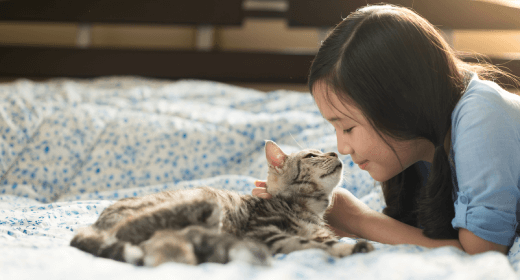
The average cat’s lifespan is around 15 years. While a cat’s lifespan indoors can range from 12 to 18 years, some pet cats even live for up to 20 years. Outdoor cats lead significantly riskier lives as they are more prone to accidents and being attacked by other outdoor animals. Moreover, they often cannot receive medical attention in cases of ailments or injuries. This leads to them have a shorter life expectancy in comparison to their indoor counterparts.
As a pet parent, you would want your fur baby to live a long and healthy life. It’s common sense that feeding your cat a high-quality diet has its benefits. But when it comes to maximizing your cat’s lifespan, diet is only part of the equation. Read up on everything you need to do to ensure your cat lives happily for a long time to come.
A cat’s age span is divided into six stages. To understand how you can maximise your cat’s life expectancy, it is necessary to understand these life stages.
From birth till 6 months, the cats are in their earliest years and are called ‘kittens’. They undergo quick development during this time and require a lot of nutrients.
From 6 months to 2 years of age, cats are considered ‘juniors’. During this time, they reach sexual maturity and develop a personality. When your cat is about a year old, they can be switched from kitten food to adult cat food.
Between the age of 3 to 6 years, cats are considered to have reached their ‘prime’ age. They will be in their best physical condition during this time. However, do make sure that you still take your cat to the vet for regular check-ups.
Cats are considered to be in their ‘mature’ life stage between 7 to 10 years of age. During this time, they might become less active. This might even cause them to put on some extra weight, so you may have to make changes to their diet. You may also have to add some extra vitamins to meals to improve immunity. This will be an important step in maximizing cat life expectancy.
Between 11 to 14 years of age, cats are considered seniors and are at a higher risk of catching an illness. Ensure that you make regular visits to the vet and consult them frequently to ensure that your fur baby is not missing out on nutrition.
At the age of 15 years or higher, cats are at the ‘geriatric’ life stage. During this time, they may remain mostly inactive and need more attention.
Here is a brief guide to explain what the average age of cats is in human years:
When a cat turns 2 years of age, it is considered equivalent to a human turning 24 years old.
After a cat turns 2, each following year in their life amounts to 4 human years. So, when a cat is 3 years old, it amounts to 28 human years; when 4 years old, it amounts to 32 human years, and so on.
Knowing what affects your pet’s lifespan can help you take the right steps to prolong longevity.
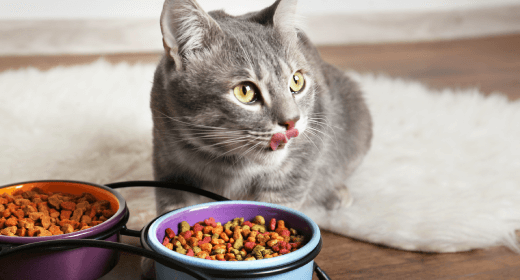
Let’s start with something you do every day: feed your cat. There are several healthy options to choose from, so we’ll help you zero in on the formula that’s best for your cat. It’s important to note that cats are natural carnivores. Therefore, a formula with meat as the primary ingredient is a great place to start. Meat as a protein source has certain nutrients, such as taurine, that non-meat protein sources simply do not. Also, along with a proper diet, ensure your cat stays hydrated.
Regular visits to the veterinarian can help nip health issues in the bud. For instance, a vet will be able to tell if your cat is gaining too much weight and can recommend a diet and fitness program to get your kitty back to a healthy size.
You may even want to bring a fresh faecal sample along to your next appointment. Your vet can use this sample to search for ringworms. This tip can save you extra trips to the vet’s office in case your cat does not cooperate, so to speak, during their appointment.
Also, vets provide your cat with the vaccinations they need to fight off diseases such as feline rabies. Some vaccinations are required annually, while others should be administered every three years. Your vet’s office can help you keep track of it all, so remember to schedule that appointment!
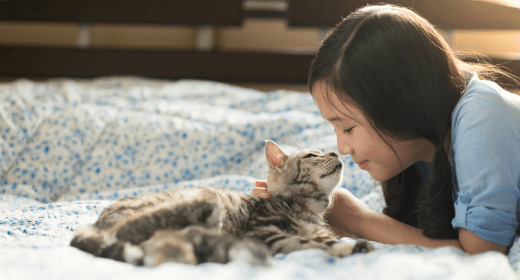
Your cat relies on you for more than just healthy food and fresh water. They need stimulation. Sure, cats love their independence, but let’s be honest, they love getting attention. By playing with your cat for even 10 to 15 minutes a day, you are doing wonders for their lifespan. Some great games to play don’t even require fancy toys. Get a piece of string and tie it around a clean sock, then yank the string whenever your cat comes in close to investigate. Voila! Instant fun!
Cats don’t go on runs as dogs do, so keeping your cat active with games and toys is the best way to help keep them fit. About 30 minutes of exercise or playing in a day is enough to have a significantly positive impact on maximizing your cat’s lifespan.
If your pet’s teeth are left unclean, they can develop plaque and tartar which can cause severe problems like pain, tooth loss, or kidney ailments. So, ensure that you take your cat for regular dental check-ups.
Follow these tips and your cat will be on her way to a long and happy life with you. You’re a great owner for taking the time to read this article. It shows how much you really care about her. Now step away from the computer and show your cat some attention!
Author: Dr. Siti Zaenab
Most owners understand that protein is one of the key nutrients that cats need to thrive and stay healthy, but what many may not fully realize is just how important it is for their long-term wellbeing. Protein is a cat’s primary energy source, and cats need more protein than other domestic animals like dogs and even people. In order to fuel their bodies and nervous systems, cats require more than 50% of their dietary calories to come from protein.
Cats then break the protein down into 11 specific amino acids, which are also known as essential amino acids, which are not found in cats’ natural systems. These essential amino acids are the building blocks that create new proteins and make glucose for energy. On the other hand, amino acids that are found within cats’ natural systems are called non-essential amino acids, and these are not required in a cat’s diet.
A cat’s diet requires animal protein that contains all the essential amino acids that cats need but are not found in plant proteins. This aligns with the understanding that cats are obligate omnivores, needing meat-based protein to survive.
The slightest deficiencies in any of the essential amino acids can lead to serious health problems for cats. For instance, taurine deficiency can cause a host of problems such as blindness, inadequate immune response, poor growth and poor reproductive function.
Another essential amino acid, arginine, is important to remove ammonia from the cat’s body through urine. Without sufficient arginine content in a cat’s diet, ammonia can build up in the bloodstream, which is toxic for the cat. Additionally, the essential amino acid histidine, is a structural protein that acts as a precursor to a number of neurological compounds such as histamine. Histidine deficiency can result in weight loss, refusal to eat, and may result in cataracts.
Cats can consume their dietary protein and obtain their essential amino acids through animal products like chicken and fish. Chicken has one of the highest biological values of all the meats, making it an excellent protein source for cats. It is also a good source of tryptophan, calcium, potassium, and vitamin B6. Fish is also a highly digestible protein source, and fish like salmon can provide cats with important omega-3 fatty acids.
While natural food options that somewhat fulfil a cat’s protein needs are available, owners these days go the extra mile to deep-dive into research to ensure better lives for their cats. Besides relying on online sources like the Internet, cat owners are also seeking more counsel from vets about their beloved cats’ needs, while also becoming more selective in their decisions and detailed in their questions, which is very encouraging to see as a vet. With this spirit, owners can better understand that their cats require adequate protein to stay healthy.
Along with veterinary guidance, owners are on the look-out for food solutions that contain all the essential protein contents in one place. We are finding that they are increasingly turning to products like IAMS products, which contain protein necessary for a variety of needs, such maintaining a healthy coat, strong muscles, and good digestion. With IAMS products, cats can get their protein needs from chicken with IAMS Healthy Adult with Chicken, with real chicken as its main ingredient, and from fish with IAMS Healthy Adult with Ocean Fish, with real fish as its main ingredient, both aiding in healthy digestion, skin and coat, teeth, and muscles, to name a few.
Owners must ensure that their cats’ diets provide complete and balanced nutrition, a key component of which is adequate protein. This can be achieved through consulting with vets, researching good protein sources, and sharing knowledge with fellow cat owners, among others. With such a concerted effort, cat owners can be assured about keeping their cats as healthy and happy for as long as possible.