Enter a keyword below to search for articles and products.
The Association of American Feed Control Officials (AAFCO) was formed in 1909 to establish a framework for uniform regulation of the feed industry. Although not a government agency, AAFCO operates within the guidelines of federal and state legislation including laws administered by the Food and Drug Administration (FDA) and the U.S. Department of Agriculture (USDA).
AAFCO establishes standards or models for regulations aimed at ensuring that manufacturers provide clear, accurate, and consistent information about animal feed, including pet food.
Every year AAFCO issues an official publication called the AAFCO Manual. This manual, in addition to listing ingredient definitions and feed terms, addresses labeling issues such as label format, ingredient lists, nutrition claims, and guaranteed analysis.
These model regulations are different than laws. However a large number of state governments have adopted AAFCO pet food model regulations into state law.
The “AAFCO statement of nutritional adequacy or purpose,” also called a “nutrition claim” or “complete and balanced statement,” identifies which life stage and/or lifestyle the product has been approved for. Under AAFCO regulations, this statement must be substantiated by the manufacturer.
AAFCO recognizes three methods for substantiating the claim:
AAFCO has outlined very specific protocols, or guidelines, for conducting feeding tests. The protocols specify test criteria including such things as:
Each life stage has its own protocol. Life stages are the same for both dogs and cats and are defined as:
A pet food with an 'All Life Stages' claim can be used from weaning through adulthood. This claim is considered an unqualified (absolute) representation of nutritional adequacy. If substantiated through feeding trials, the protocol for gestation/lactation and growth must be performed sequentially, using the same group of animals.
AAFCO regulations state that specific wording must be used when a diet is intended for special nutritional or dietary needs that require the involvement of a veterinarian for diagnosis, management, and follow-up.
Understanding the AAFCO statements for nutritional adequacy can help customers choose a high-quality diet that provides complete and balanced nutrition for the appropriate life stage of their dog or cat.
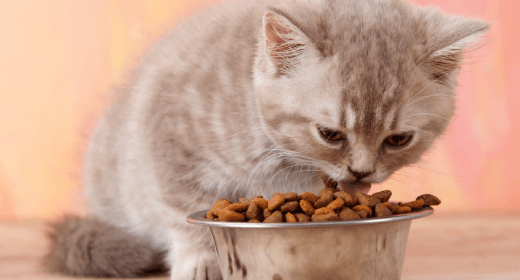
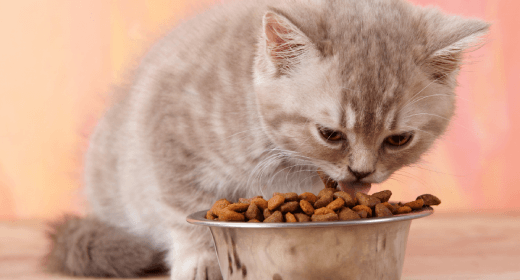
If you are considering an all-natural, holistic, or organic kitten food, here are some facts you may not be aware of. Currently the pet food market is experiencing a push toward “all-natural,” “holistic,” and “organic,” the significance of which is still to be determined. The question becomes, is there an actual benefit to an “all-natural,” “holistic,” or “organic” diet?
AAFCO defines “natural” as “…derived solely from plant, animal, or mined sources… not containing any additives or processing aids that are chemically synthetic except in amounts as might occur unavoidably in good manufacturing practices.”
Loosely interpreted, this definition could include a range of “natural” products, including tobacco or any other naturally grown drug or substance.
None of these “all-natural” products are considered healthy additives for your kitten. So it is apparent that regulatory work is needed to define the true beneficial use of all-natural. Also noteworthy is the fact that nowhere within the definition are plant and animal by-products excluded. Not only are they “natural,” but they contribute valuable nutrients as ingredients in human and animal foods.
The term “holistic” kitten food is not distinctly defined by any of the regulatory agencies as a classification for food. This is particularly noteworthy in kitten food, because all diets sold commercially must be “Complete and Balanced” for a designated age or activity level. Or in other words, be a “holistic” dietary approach.
Organic kitten food is labeled “organic” by a government-approved certifier who inspects the farm where the food is grown to make sure the farmer is following all the rules necessary to meet USDA organic standards. Whether organic kitten food provides any additional safety or nutritional value is still being debated by experts. Even the USDA refuses to take a position. It is also important to note that there are no strict requirements for organic kitten food right now.
There is tremendous confusion surrounding the significance of all-natural, holistic, and organic kitten food terms. Widespread use without substantiation has forced several government and “watch-dog” consumer groups to become involved; this will result in more education and clarification as to what these terms really mean to consumers. But, for now usage of these terms requires your consideration.